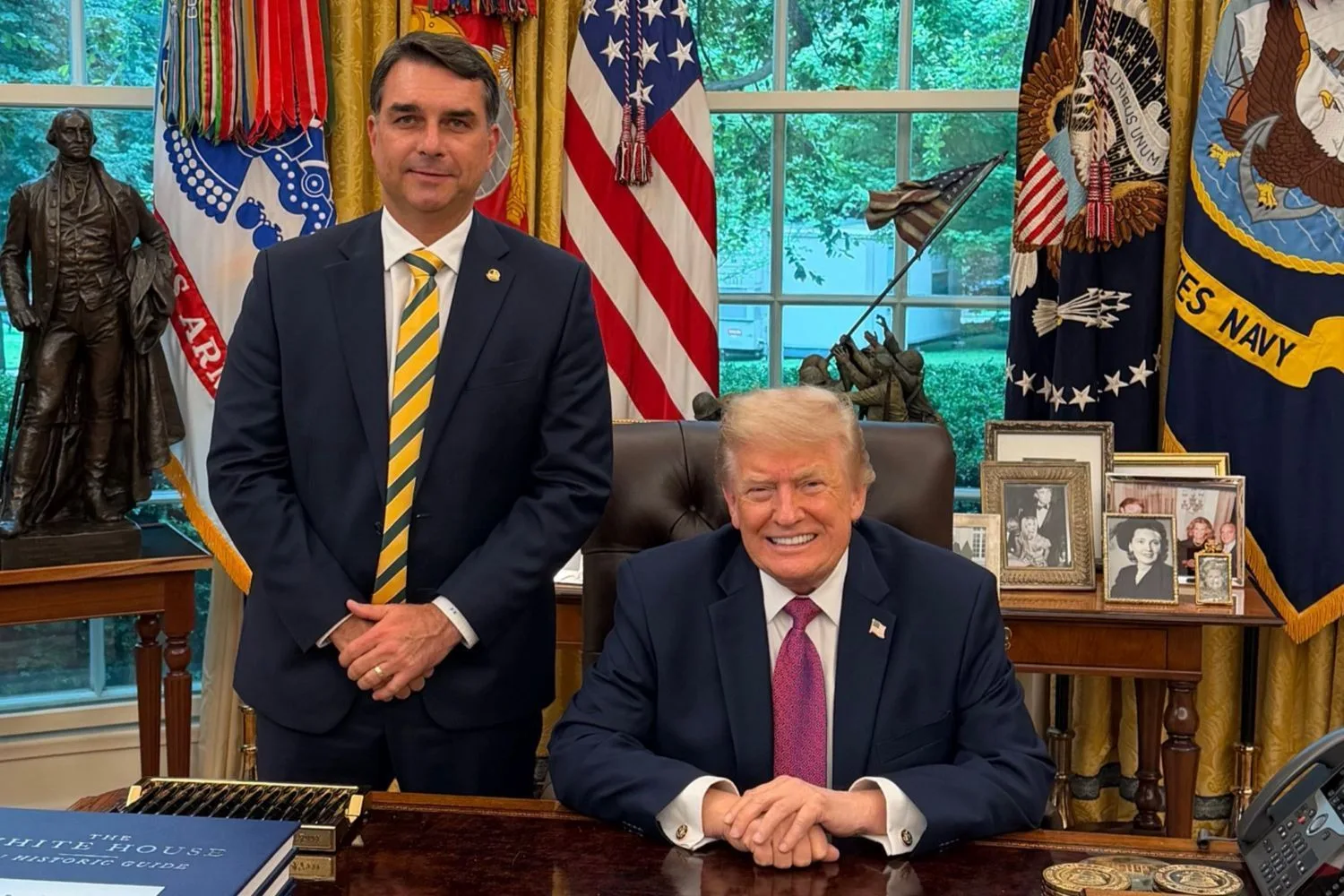
The Luiz Inácio Lula da Silva (PT) government should not send representatives to the hearing scheduled for July 6, in the United States, in which senator Flávio Bolsonaro (PL-RJ) and the impeached former deputy Eduardo Bolsonaro (PL-SP) will participate. The predominant assessment in Itamaraty is that the government’s absence will avoid legitimizing an initiative led by the opposition and will preserve official negotiation channels between Brasília and Washington.
According to a diplomat interviewed on a confidential basis, the meeting on July 6th is not part of the formal negotiations between the two governments. The hearing organized by the Office of the United States Trade Representative (USTR) brings together businesspeople and parliamentarians and takes place in parallel with diplomatic negotiations on the so-called “tariff” imposed by the United States on Brazilian products. Flávio requested to speak at the event on his own, on the last day of registration.
In the government’s assessment, the conversations that can effectively produce results take place in another sphere: between Itamaraty, the Ministry of Development, Industry, Commerce and Services (MDIC), the Brazilian Embassy in Washington and representatives from the Office of the United States Trade Representative (USTR). New meetings between the technical teams must still take place before July 6th and, mainly, before the deadline considered decisive on July 15th.
The reading within the government is that Flávio Bolsonaro does not have the legitimacy to officially represent the Brazilian State in trade negotiations. Therefore, sending a representative to the hearing would mean recognizing the senator as a valid interlocutor, which, in the view of Brazilian diplomacy, would only strengthen a political strategy constructed by the opposition.
The understanding is that the senator will end up taking on the political wear and tear surrounding the tariffs and articulations with members of the North American government alone. Members of the diplomacy assess that their participation could serve more for the production of political content and narratives aimed at the Bolsonaro public than for concrete advances in bilateral negotiations.
The same assessment applies to the letter recently sent by the US Secretary of State, Marco Rubio, to Flávio Bolsonaro. For Itamaraty, the gesture is part of the attempt by sectors of the opposition to present themselves as privileged interlocutors for Washington, but it does not change the fact that official negotiations continue to be conducted exclusively through diplomatic channels.
At this moment, the government’s focus is to conclude the new stage of negotiations with the United States. After an initial phase aimed at demonstrating that Brazilian policies do not discriminate against North American companies, Brasília is now seeking to discuss alternatives that could avoid or reduce the application of tariffs before the deadline scheduled for mid-July.
Source: www.brasildefato.com.br