Published 03/27/2026 11:37 | Edited 03/27/2026 12:00
The war of aggression by the United States and Israel against Iran is at the service of a strategy to neutralize OPEC’s ability to regulate the market and take control of the rate of production and oil prices on a global scale, with its axis being the appropriation of large strategic reserves, such as those in Venezuela and Iran itself.
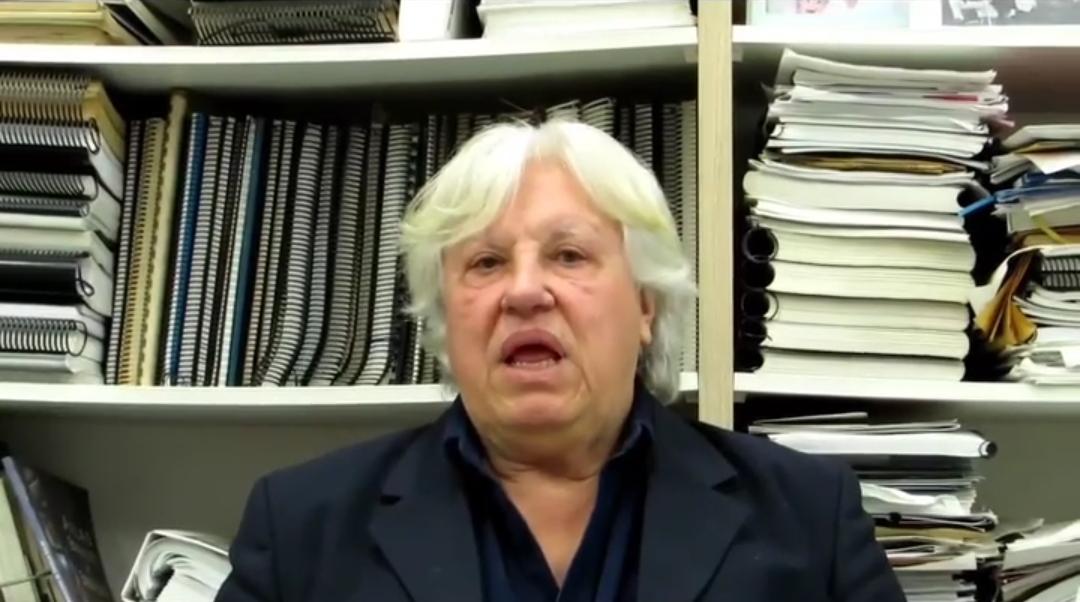
The assessment is by professor Ildo Sauer, head of the USP Energy Institute and former director of Petrobrás, who, in an interview with Red Portalstates that the offensive combines military power, geopolitical pressure and energy control to reorganize the international system under Washington’s command, with direct impacts on countries dependent on Gulf oil — especially in Asia — and on the global economy as a whole.
“There is a strategy to neutralize the action of OPEC, to place the pace of production, access to oil and the accumulation of economic surplus under the control of the large North American oil companies and the North American State, controlling production, controlling price, to extract surplus or benefit consumption”, he states.
The Organization of Petroleum Exporting Countries (OPEC), created in 1960 by Iran, Iraq, Kuwait, Saudi Arabia and Venezuela, among other major producers such as Algeria, Angola, Congo, United Arab Emirates, Gabon, Equatorial Guinea, Libya and Nigeria, acts in a coordinated manner to regulate supply and influence oil prices on the international market.
According to Sauer, the United States’ strategy involves removing this power from exporting countries, which represent 38% of world production, and transferring it to Washington.
For him, the campaign in the Middle East has already had a first laboratory in Latin America.
Sauer states that the United States advanced on Venezuela as a way of demonstrating that, given strategic resources, direct intervention is a central instrument for reorganizing global power.
In this sense, the country would have been used as a starting point for a broader offensive on the international energy system.
“He took over Venezuela and wanted to neutralize Iran, taking its reserves through a new regime in Tehran”, he summarizes.
In his assessment, the movement sought to consolidate a sequence of actions that articulated regime change, control of reserves and reorganization of the global oil market.
Sauer also maintains that control of these reserves paves the way for the use of oil as an instrument of geopolitical pressure, especially against economies dependent on energy imports.
According to him, this logic would allow the United States to “strangle China, mainly in terms of access to oil”, while at the same time shifting the center of decision-making on production and prices.
However, the war of aggression “found in the Iranian response capacity a concrete limit to the North American strategy”.
Sauer states that Tehran not only resisted militarily, but also began to operate with a strategic advantage by controlling one of the main chokepoints in the global energy system.
According to him, the Strait of Hormuz — through which about a fifth of the oil consumed in the world passes — has become a decisive instrument of pressure, by concentrating the energy flow from countries such as Saudi Arabia, Iraq, Kuwait and Qatar.
In the professor’s assessment, control of this route changes the balance of the war by allowing Iran to directly interfere with global supplies.
“See, Iran controls the flow of its oil, a large part of it from Saudi Arabia, practically all of it from Kuwait and Iraq, and can reduce the supply by around 15% to 20% of world oil consumption, which has consequences — in addition to the increase in price — in the difficulty of rearranging the origin and destination”, he states.
Sauer also maintains that the escalation exposed the “absence of strategic calculation on the part of the United States, which was drawn into the conflict by Israel.”
For him, “the offensive ignored the economic and logistical effects of a possible blockade or prolonged instability in the region, which ended up increasing the costs of the operation itself” and transforming the Strait of Hormuz into what he defines as the possible “Waterloo” of the North American strategy, in reference to Napoleon’s final defeat.
“It is difficult to understand how it was not possible for the United States to have anticipated the consequences of what was done,” he states, pointing out that the energy crisis generated by the war tends to prolong and affect economies dependent on Gulf oil more intensely.
“Releasing reserves is insufficient”, says Sauer
In recent weeks, the International Energy Agency (IEA), through its executives, has given signals that the energy crisis generated by the start of imperialist actions by the White House is “very serious” and that the global economy is “facing an enormous threat”.
For Sauer, the size of the disruption can be measured by the scale of global supply. “The world today consumes around 100 million barrels per day. If you take 15%, 20% [parcela que passa por Ormuz] In addition, you are talking about a very significant reduction. At least 15 million barrels would be missing.”
In an attempt to delay the crisis, the IEA announced on March 11 the release of 400 million barrels of oil from its emergency reserves to contain the rise in fuel prices caused by the war in the Middle East.
For Sauer, however, this type of measure has limited scope. “There is not enough idle capacity to replace a loss of this magnitude in the short term. Even if some countries increase production, this takes time and depends on technical and political conditions.”
“Strategic stocks can momentarily mitigate, but they do not solve the problem, because they do not replace a loss of this magnitude in the daily flow”, he concluded.
Without the ability to compensate in the short term, the effects of the disruption will impact the international energy system unevenly, hitting economies dependent on energy imports hardest.
“The world depends on this flow of oil that flows from the Strait of Hormuz, mainly China, Japan, India, South Korea and Europe. They are the ones who most need this circulation of energy to continue happening normally”, he states.
Energy dependence and sovereignty in the face of war
In the case of the United States, the expansion of domestic production in the last two decades has reduced external dependence on energy and increased its ability to operate with greater autonomy in the global market.
“The United States, from 2003, 2004, 2005 and onwards, rapidly developed the capacity to extract oil and gas — and gas liquids — from so-called shale oil, which, combined with conventional oil from the Gulf of Mexico and Alaska, guarantees the United States a condition of great energy autonomy”, he explains.
So-called shale oil is a method that allows oil and gas to be extracted from deep rock formations through hydraulic fracturing, a technique that has expanded rapidly in the United States in the last two decades.
This condition reduces direct dependence on Gulf oil and expands Washington’s scope for action on the international stage.
“This adventure in the Middle East — the adventure against Iran — which mainly devastates Europe and tries to devastate China and India, also plaguing Japan and Korea, would have been much more difficult without shail oil”, he assesses.
In Europe, on the other hand, the energy crisis adds to structural weaknesses accumulated in recent years.
“Europe is deeply dependent on Liquefied Natural Gas (LNG) from Qatar, in addition to what they import from the United States and other countries, as they have renounced the gas assured — at a cost of more or less a quarter of the current price — from the large lines of old gas pipelines coming from Russia, from Siberia”, he explains.
The replacement of Russian gas with more expensive and unstable sources has structurally increased the continent’s energy costs.
“So, this consequence for Europe — apart from the more expensive oil — is the much more expensive gas and, now, it is not even more expensive to meet the demand”, he explains.
For Sauer, this movement is already having effects on the European production base.
“The rise in the prices of electrical energy and derivatives was one of the factors that helped with deindustrialization”, he states, pointing out that the increase in energy prices compromises industrial competitiveness and puts pressure on economic activity.
In this context, the current shock tends to deepen a dynamic already underway: high prices, supply restrictions and reorganization of energy flows with direct impacts on inflation, production and growth on a global scale.
The situation in Brazil
In the Brazilian case, Sauer assesses that “the international energy crisis affects a country that produces oil in a significant volume, but operates without effective instruments of control over its energy policy and the pace of exploration of its own resources”.
“We delegate, via sharing or concession contracts, microeconomic contracts without sovereign power to organize the pace of production”, he explains.
Sauer refers to the models that govern oil exploration in the country and that transfer to companies — and not to the State — the decision on how much to produce and at what pace, according to market criteria.
In practice, this limits Brazil’s ability to adjust its production in the face of international crises or to use oil as an instrument of economic policy.
The professor refers to two legal models for the oil sector in Brazil:
- Concession (model from the FHC years): company gains the right to explore and keeps the extracted oil, paying royalties
- Sharing (pre-salt): oil belongs to the Union, but companies operate and keep part of the production
Sauer explains that the institutional design “made by Fernando Henrique has been substantially maintained to this day”, which “impacts on the regulatory structure of the sector and its effects on the country’s energy sovereignty”.
For the professor, the increase in the cost of energy — especially electricity and petroleum products — has a direct impact on the industry.
“The rise in the prices of electricity and derivatives was one of the factors that contributed to Brazilian deindustrialization”, he states.
It is at this point that he criticizes the abandonment of the nuclear program, treated as a more complete expression of the loss of strategic horizon.
Upon recovering his own performance — “I worked as project manager for the primary circuit of the Angra nuclear reactor” — Sauer maintains that the country built relevant technological capabilities in the sector, but were later discontinued.
“After the Sarney government […] everything was abandoned and no government took it back”, he states.
For him, this discontinuity simultaneously compromises three dimensions: the diversification of the energy matrix, technological autonomy and defense capacity in a world dominated by imperialist aggression.
Sauer maintains that countries that give up these instruments tend to operate in a subordinate position.
Source: vermelho.org.br