Published 03/24/2026 14:28 | Edited 03/24/2026 14:48
The American release of up to 1.5 million barrels per day from the Strategic Petroleum Reserve (SPR) exemplifies how robust stocks confer energy sovereignty on powerful nations. Announced by Energy Secretary Chris Wright the week before last (11), the operation totals 172 million barrels and is part of the largest coordinated action in the history of the International Energy Agency (IEA), with 400 million barrels released by 32 member countries. The objective is to contain global price volatility, triggered by attacks by Israel and the United States against Iran and by interruptions to the flow in the Strait of Hormuz, through which 20% of the world’s oil passes.
China and the USA: stocks as an instrument of power
China is currently the country with the largest absolute volume of oil stored in the world. Monitoring estimates indicate something between 1.2 and 1.3 billion barrels in strategic and commercial reserves, which covers around four months of its imports and is equivalent, in terms of domestic consumption, to something like 70 to 80 days of domestic demand. Even though it is the largest consumer on the planet, with around 16.4 million barrels per day, Beijing has enough cushion to overcome supply shocks without paralyzing the economy, guaranteeing room for geopolitical maneuver.
The United States produces about 70% of the oil it consumes, but keeps about 415 million barrels in reserve (SPR). In relation to total American consumption — approximately 20.5 million barrels per day — this volume would correspond to just over 20 days of use. In practice, however, the reserve functions as an economic “emergency brake”: with the capacity to release up to 4.4 million barrels per day, the government influences domestic prices and international prices of the commodity.
Expert Analysis: The “Second Act”
“We are in the ‘Second Act’ of the return to energy security. War in Iran is a potential nightmare scenario for the Strait of Hormuz, but markets are more resilient thanks to strategic stocks from the IEA, China and the US,” said Daniel Yergin, vice president of S&P Global and author of The Prize. Meghan O’Sullivan, a Harvard professor and former White House advisor, analyzes that “the strategic reserves of the USA and China shape energy sovereignty. The coordination of the IEA shows that the global system has important buffers”, he highlighted.
Japan, Europe and India: layers of protection
Among Washington’s allies, Japan stands out with 470 million barrels, guaranteeing around 254 days of domestic consumption. South Korea has between 150 and 200 million barrels, enough for 60 to 75 days of consumption. In Europe, Germany maintains 177 million barrels (75-80 days of consumption), while Spain, France, the United Kingdom and Italy complete the pack with stocks ranging from 40 to 100 days of internal autonomy.
At the other end, India illustrates the vulnerability of large importers. With reserves of just 25 to 39 million barrels compared to a daily consumption of 5.2 million, New Delhi has less than 10 days of direct protection, leaving it highly exposed to instability in the Persian Gulf.
Brazil: producing power without strategic “shield”
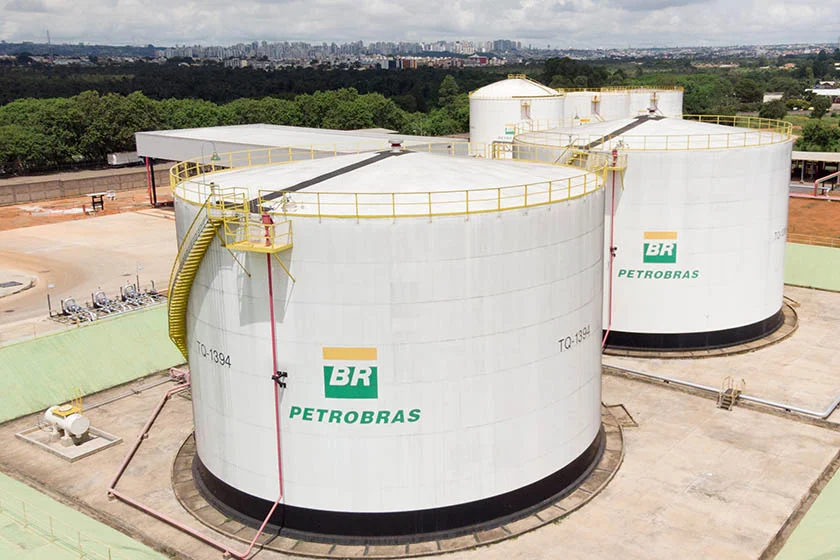
The contrast is sensitive for Brazil. The country is among the largest global oil producers, with production of over 3.9 million barrels per day and proven fossil reserves of 16.8 billion barrels. Despite being a net exporter of crude oil (1.7 million/day), Brazil does not have a structured National Strategic Reserve.
Unlike the powers that keep strategic reserves parked for emergencies, Brazil only has operational stocks — the oil that is already circulating in the logistics system of refineries and pipelines. According to sector data, this volume totals between 45 and 55 million barrels. Although the number seems significant, it guarantees an autonomy of only 15 to 20 days of domestic consumption. In practice, as the country is dependent on imports for around 30% of its diesel, any interruption in international flow would affect cargo transport in less than a week, highlighting the fragility of our energy ‘shield’.
“It makes no sense for Brazil to be a major oil producer and remain hostage to external shocks”, declared President Lula last Friday (20), defending the creation of a national reserve to guarantee sovereignty and protect the population from “imported inflation”. Without this mechanism, the country remains vulnerable to crises that increase the price of diesel and gasoline almost instantly.
Sovereignty and the nightmare scenario
In an extreme scenario of prolonged closure of the Strait of Hormuz, analysts project a barrel of Brent crude between US$140 and US$180, with a risk of global recession. While great powers use their reserves to buy time and stability, countries without sovereign reserves, like Brazil, are at the mercy of the next wave of international shocks.
The largest strategic oil reserves and how long each country can survive
| Country | Reserve Volume (Barris) | Daily Consumption (Barrels) | Equivalent volume in consumption daily | Reservation on Import days |
| China | 1.2 – 1.3 Billion | 16.4 Million | 70 – 80 dias | 100 – 120 dias |
| Japan | 470 Million | 1.85 Million* | 254 dias | +300 dias |
| USA | 415 Million | 20.5 Million | 20 dias | 200 days (30% of consumption is imported) |
| Germany | 177 Million | 2.2 Million | 75 – 80 dias | 90 – 130 dias |
| South Korea | 150 – 200 Million | 2.6 Million | 60 – 75 dias | 200 – 208 dias |
| Spain | 150 Million | 1.4 Million | 100 dias | 120 dias |
| France | 120 Million | 1.7 Million | 70 dias | 90 dias |
| Italy | 76 Million | 1.3 Million | 55 – 60 dias | 90 dias |
| United Kingdom | 70 Million | 1.6 Million | 40 dias | 90 dias |
| India | 25 – 39 Millions | 5.2 Million | 5 – 8 dias | 8 – 10 dias |
| Brazil | 45 – 55 Million** (Operating volume) | 2.5 – 2.6 Million*** | 15 – 20 dias | Net Oil Exporter and importer of 30% of diesel |
*Official Japanese safety calculation. **Operating stocks (Petrobras/Distribuidoras). ***Consumption focused on derivatives. Sources: EIA Weekly Petroleum Status Report (18/03/2026), IEA Oil Market Report (March/2026), Al Jazeera (23/03/2026) and Vortexa (Official data consolidated on March 18, 2026).
Source: vermelho.org.br