Published 03/18/2026 09:11 | Edited 03/19/2026 08:22
Exactly 155 years ago, on March 18, 1871, the French working masses rose up against the power of the ruling classes and founded the Paris Commune. From then on, until May 28, 1871, they staged the first general rehearsal of the seizure of political power, an “assault on the heavens”, as Marx called it, which to this day echoes as a real threat to the bourgeois order. The Paris Commune was a demonstration that the exploited can organize their lives without oppressors and exploiters, without executioners dressed as generals and without the yoke of the State at the service of capital.
The workers’ government
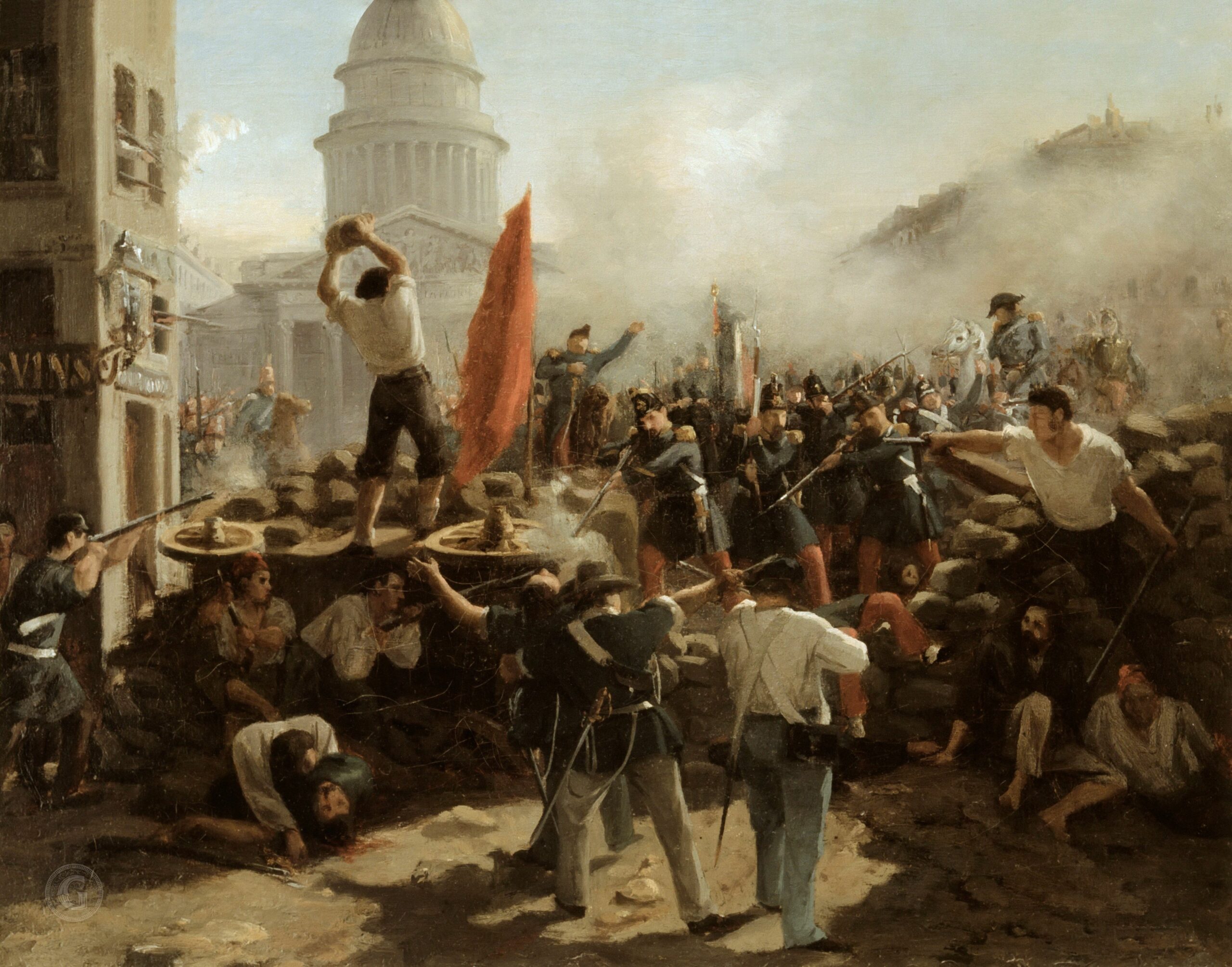
Amid the humiliation of the defeat in the Franco-Prussian War and the siege of Paris, while the bourgeoisie cowered in Versailles, the people of the French capital erected barricades and, for the first time in history, placed power in the hands of the proletariat. For 72 days, the Commune was not just an uprising, but the crystallization of a new way of governing and living. Workers took over economic management, decreed the definitive separation between Church and State, instituted secular and free education, and established that any public employee should receive a worker’s salary, eliminating the privilege of high bureaucracy, and all positions became elective and subject to immediate revocation, a mortal blow to the old state caste that had always served the bourgeoisie.
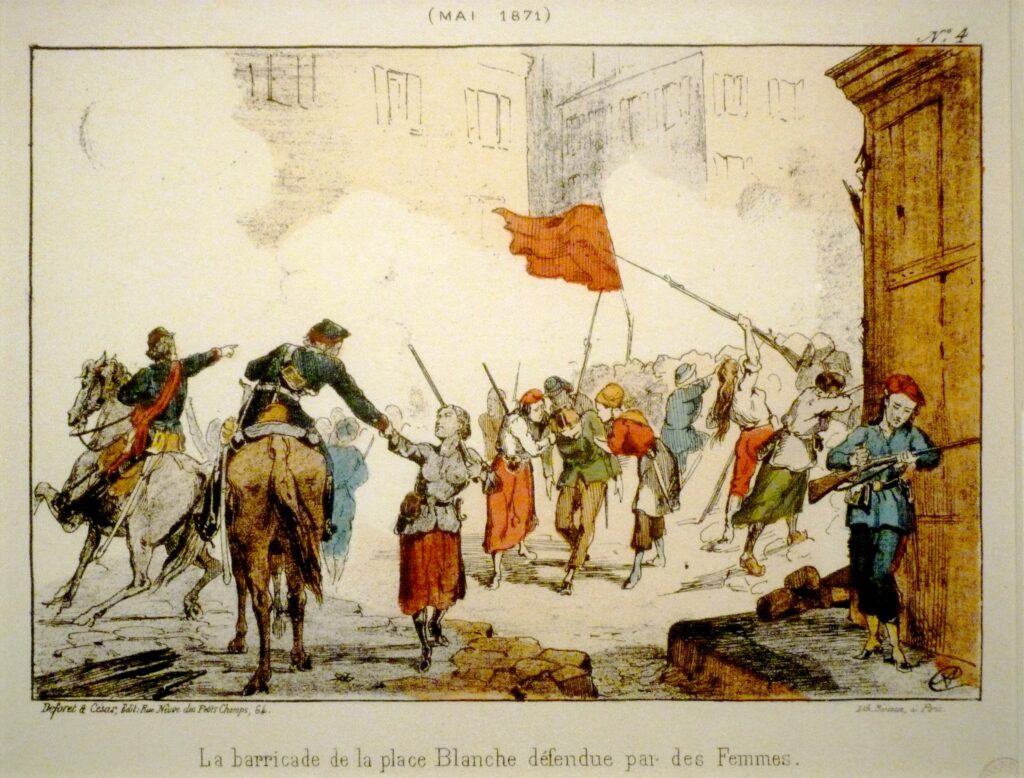
Women played an undeniable role, organizing themselves into the Women’s Union for the Defense of Paris and Care for the Wounded, proving that the social revolution is only complete with female liberation.
The Paris Commune practiced emancipation in every decree, in every decision taken in the public sessions of the Commune Council. There were 72 days of a revolutionary social laboratory that anticipated the great achievements of working humanity by decades. As Karl Marx observed, the greatness of the Commune lay in the discovery of a concrete political form for the emancipation of the working masses. For him, the Commune was “the political form finally discovered to carry out the economic emancipation of work”. It was living proof that “workers wanted to organize their own social life according to principles of association and cooperation”. It was the dress rehearsal of dismantling the state hierarchies of the ruling classes and creating and creating, in everyday practice, a new form of democracy.
The bloody week
Naturally, this threat to bourgeois domination could not go unpunished. The elite taking refuge in Versailles, under the command of Adolphe Thiers, worked together with the German invaders to suffocate the Commune. The result was “Bloody Week” (21 to 28 May), one of the largest massacres of workers in European history. It is estimated that between 20 and 30 thousand Communards were summarily shot in the streets and at the famous Federal Wall in the Père Lachaise cemetery. Around 45,000 were arrested and thousands deported. The ferocity with which the bourgeoisie reacted revealed the deep fear that the Commune had instilled: the fear that those below had finally discovered the way to never let go of power.
The strategic lessons
Despite its military crushing, the Commune’s political triumph is perennial. It bequeathed to the world proletariat indispensable lessons, later systematized by Lenin. In his text “Teachings of the Commune”, Lenin highlights the need not to repeat the mistakes of excessive generosity and hesitation: “the proletariat must never forget that, under certain conditions, the class struggle takes the form of armed struggle and civil war; there are times when the interests of the proletariat demand a ruthless extermination of enemies in head-to-head combats”. For him, the Commune taught the European proletariat to “propose in concrete form the tasks of the socialist revolution”, overcoming patriotic illusions and the naive belief in class conciliation.
Heroism to the last cartridge
If the political creativity of the Commune was extraordinary, the heroism of the Communards in the final hour reached epic dimensions that still move and inspire today. When the Versailles troops, with vastly superior strength and modern weapons, entered Paris through the open door of betrayal, they found in front not a cowed people, but a city transformed into a fortress of workers’ dignity. Men, women and even children took up rifles and climbed the barricades, hastily built on every corner, in every square. Women had legendary performances, such as those who fought in Place de la Bastille and Montmartre, many of them carrying their children in one arm and the red flag in the other.
As the troops advanced, the martyrdom increased: summary shootings became routine, and the Communards, aware that there would be no mercy, fought with the bravery of those who know their cause is just. The most symbolic episode of this heroic resistance occurred at the Père Lachaise cemetery, where the last 147 combatants, surrounded and without ammunition, were lined up against a wall and executed. His sacrifice, however, was not in vain. That wall has become sacred to the world proletariat, a place of pilgrimage and memory, where every year workers from all countries renew their oath to fight until exploitation is wiped from the face of the earth.
The national betrayal of the bourgeoisie
If there is one aspect that exposes the moral rot of the bourgeoisie as a dominant class like no other, it was the explicit alliance between the Versailles government, led by Adolphe Thiers, and the German invader that until the day before humiliated France. During the war against Prussia, the French bourgeoisie proved incapable of organizing national defense, preferring to surrender and hand over territories rather than arming the people. But when the workers of Paris, precisely the same ones who had endured the siege and hunger, dared to take up arms to defend the city and proclaim their own government, the “grand patriotic bourgeoisie” did not hesitate for a second. Thiers, that political dwarf that Marx described as a “monster of mediocrity”, negotiated with Bismarck the release of tens of thousands of French prisoners of war so that they, under the command of the Versailles generals, could massacre the Parisian workers. In return, the French bourgeoisie accepted humiliating peace conditions and the payment of billion-dollar indemnities to Germany. The ruling class has thus proven that its patriotism is a sham: when the class enemy is in front of it, it prefers to ally with the foreign enemy rather than cede any share of power to the proletariat.
The cannons aimed at Paris by the Versailles troops had been manufactured in Germany and delivered by the generosity of the national enemy. This episode teaches future generations an unavoidable truth: the bourgeoisie has no homeland when its privileges are at stake; its only homeland is exploration, and in the face of the communist threat, all borders dissolve in the alliance against the revolution.
*
Today, as we celebrate 155 years of this milestone, it is not about looking at the past with nostalgia, but about extracting the courage and creativity of those workers for today’s struggles. The cry of the Communards for decent housing, public education, an end to exploitation and gender equality resonates with redoubled force in times of capital crisis. The Commune reminds us that the conquest and exercise of political power by the proletariat is a real possibility.
Source: vermelho.org.br