Published 03/18/2026 14:47 | Edited 03/18/2026 17:14
China announced the sending of humanitarian aid to war-hit countries in West Asia, in statements made this Tuesday (17), at the same time as it intensified its speech for a ceasefire and regional stability.
Amid the military offensive led by the United States and Israel since the end of February, which has already caused thousands of deaths and displaced millions, Beijing seeks to project itself as a voice for the containment of the conflict and the resumption of peace, combining emergency assistance with diplomatic action.
The Chinese government has allocated US$200,000 in emergency humanitarian assistance to the Iranian Red Crescent Society, focusing on the families of the girls murdered in the murderous US attack on a primary school in Minab, in the southern province of Hormozgan.
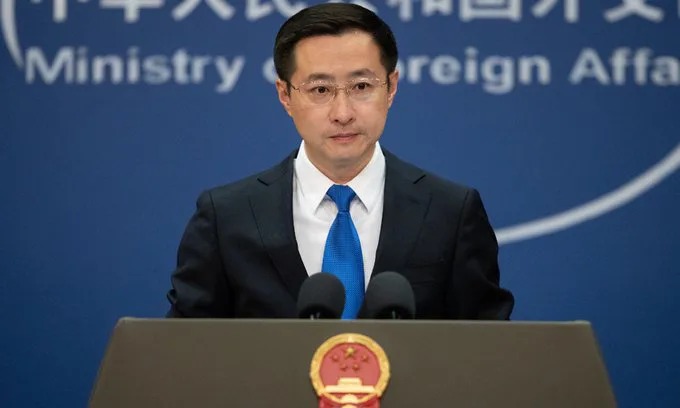
The move was announced by Foreign Ministry spokesman Lin Jian as part of Beijing’s response to deteriorating humanitarian conditions in the region.
According to the spokesperson, the initiative is part of the Chinese foreign policy guideline that defends “a community with a shared future for humanity”. Lin Jian stated that the ongoing conflicts have caused “serious humanitarian disasters” not only to the Iranian people, but also to other West Asian countries affected by the military escalation.
In the same statement, the Chinese representative stated that Beijing “will continue to make efforts to promote peace and stop war”, highlighting the defense of “the rapid restoration of regional peace and stability” and the need to avoid worsening the humanitarian crisis.
The announced aid comes amid the expansion of the impacts of the war that began on February 28, which has already affected multiple countries in the region.
In Iran, more than 1,300 people were killed, including the then supreme leader, Ayatollah Ali Jamenei, while between 600,000 and one million families were displaced, affecting around 3.2 million people, according to data from the United Nations High Commissioner for Refugees (UNHCR).
In the capital, Tehran, 503 people died and 5,700 were injured, according to information released by Mohammad Esmail Tavakoli, director of the province’s Emergency Services, to the ISNA agency on March 16.
The impact of the offensive also extends to Lebanon, where, between March 2 and 14, Israeli attacks left 826 dead and 2,000 injured, according to the Ministry of Public Health. The country also recorded the deaths of 31 health professionals, the forced closure of five hospitals and the displacement of more than 830,000 people.
In addition to direct assistance to Iran, China has expanded its diplomatic activities in the face of regional escalation. Lin Jian also addressed tensions between Afghanistan and Pakistan, stating that direct dialogue is “the only effective way to resolve bilateral issues” and advocating a reduction in tensions.
Beijing urged both countries to guarantee the safety of Chinese personnel, projects and institutions in their territories, while reiterating that it will continue to act constructively to contain instability.
Data from the UN Assistance Mission in Afghanistan (Unama) indicate that 185 civilians were affected between January 26 and February 5 in the border region between the two countries, with 56 killed and 129 injured in air strikes and indirect fire. More than half of the victims, 55%, were women and children.
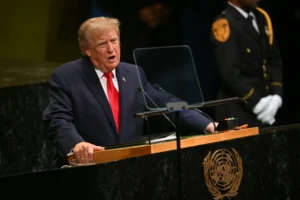
In the same statement, the Chinese spokesperson confirmed that Beijing maintains communications with the United States to define the date of a possible visit by President Donald Trump to China. According to him, the two countries remain in active dialogue about the details and agenda of the meeting.
Source: vermelho.org.br