Published 03/16/2026 1:35 pm | Edited 03/16/2026 14:04
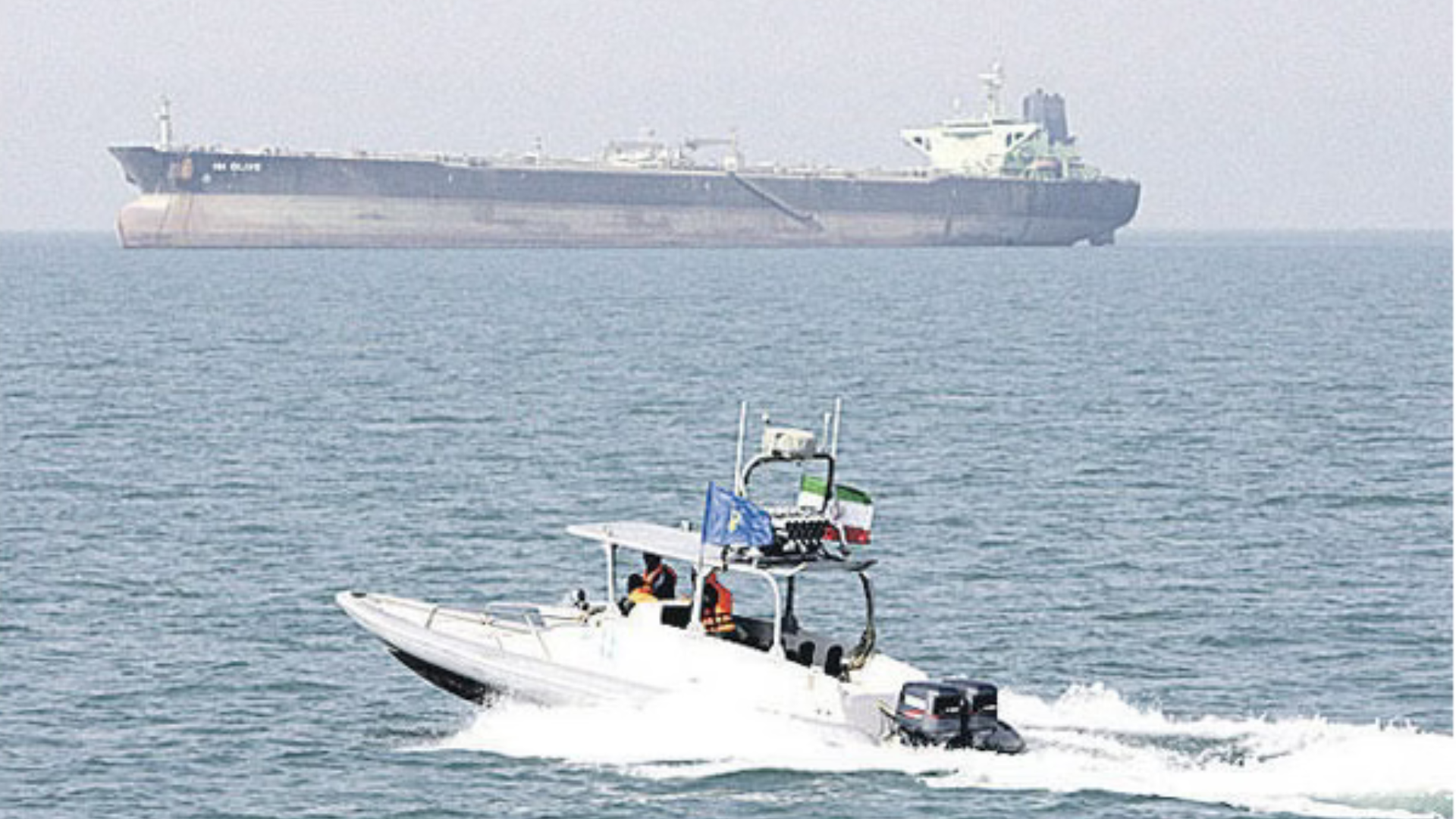
Donald Trump’s government faces a scenario of diplomatic isolation after its initial failure to enlist a military coalition to patrol the Strait of Hormuz. Powers in Europe and Asia reacted with evasions or direct denials to Washington’s call. The impasse reveals a White House that, although proclaiming “total victory” over Iran, is unable to project the leadership necessary to stabilize one of the most sensitive maritime routes on the planet.
Countries refuse the call
Last Saturday (14), Trump used the far-right platform Truth Social to demand that the region’s oil-dependent nations bear the costs and risks of navigation. Washington’s argument is that the US should no longer bear alone the protection of a route that directly benefits economies like China and Japan.
The scenario of diplomatic paralysis in the Strait of Hormuz exposes the fragility of the “maximum pressure” strategy adopted by the Trump administration. France, through its Ministry of Foreign Affairs, was adamant in maintaining its aircraft carrier in the Eastern Mediterranean, with no plans to move to the Gulf. Following a similar line of caution, the United Kingdom and South Korea limit themselves to technical analyses, without any confirmation of sending military assets to the region. Australia also said it will not send a ship to the Strait of Hormuz.
Even nations vitally dependent on oil flows are hesitant to join the coalition. Japan, supported by its pacifist Constitution, frustrated the White House’s expectations by stating that it will make “independent” decisions, despite 95% of its oil transiting through Hormuz. China, for its part, has avoided naval commitments, restricting itself to diplomatic calls for a ceasefire and shared responsibility.
Trump’s insistence on demanding an active stance from Beijing takes on the appearance of a provocation or strategic miscalculation, given that Iran has already publicly declared that it would not block oil tankers from partners such as China and India. This safe conduct makes the North American request unusual, suggesting that the pressure on the Chinese is aimed more at political erosion than at energy security itself.
Even the pillars of US influence in the Middle East have receded. Saudi Arabia and the United Arab Emirates signaled that the priority is the defense of their own territories, explicitly rejecting the use of their bases for possible North American attacks. This total isolation leaves the international patrol proposal at an impasse, transforming the attempt to “outsource” security into a trigger for new commercial tensions with NATO.
From diplomacy to tariff blackmail
The White House’s frustration in Hormuz does not occur in a vacuum and adds to an escalation of tensions with NATO. In a maneuver that mixes strategic defense with economic protectionism, Trump threatens to impose tariffs of 10% to 25% on European allies — including France, Germany and Nordic countries — in retaliation for military exercises carried out in Greenland in January this year.
For international analysts, Trump’s stance signals an unprecedented fragmentation in the Atlantic alliance. By conditioning military adherence to trade agreements and punitive tariffs, Washington opts for a confrontational policy that pushes former allies towards neutrality or the search for strategic autonomy.
Repercussion and Perspectives
The expectation is that the systematic refusal of countries to join the Hormuz patrol will generate new rhetorical explosions from the Oval Office. Diplomatic sources anticipate that Trump may use the trade deficit with Japan and South Korea as a new bargaining chip to force military accession. However, what we see on the horizon in 2026 is a United States increasingly acting unilaterally, while the world observes, with increasing skepticism, the effectiveness of a foreign policy based on ultimatums and social media posts.
Source: vermelho.org.br