Published 03/06/2026 08:52 | Edited 03/06/2026 18:58
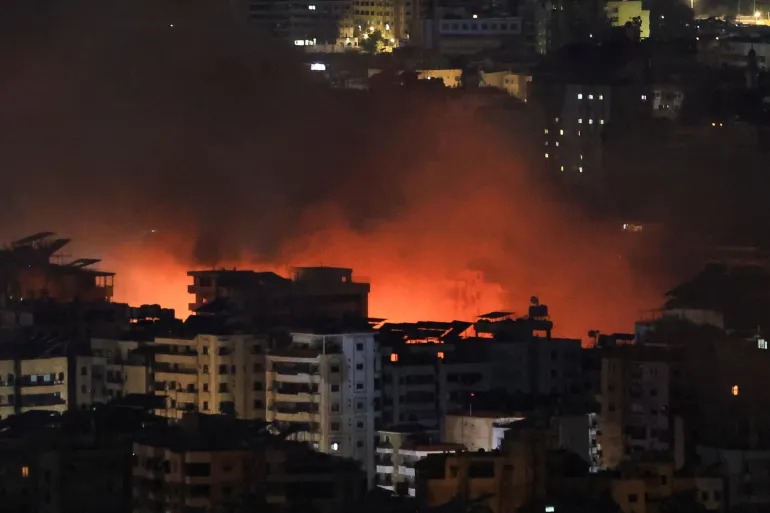
This Thursday, Israel bombed the capital of Lebanon, Beirut, especially the Dahiyeh region, after ordering the withdrawal of the entire densely populated area of the Lebanese capital.
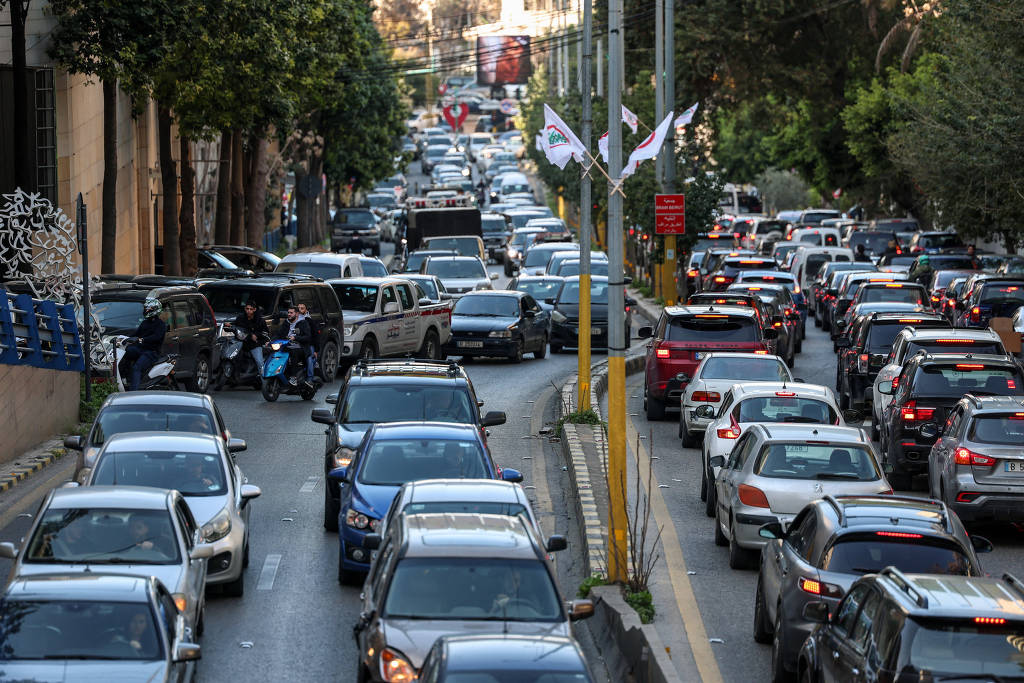
The order hit a region where around half a million people live and caused panic, widespread congestion and the flight of thousands of residents, many of them forced to seek shelter on the city’s streets or beaches.
According to Lebanon’s Ministry of Health, this week’s Israeli attacks have left 123 dead and 683 injured. Tens of thousands of civilians were displaced, while entire neighborhoods of the capital were left empty following the evacuation order.
Israel also increased the intensity of bombings in other regions of Lebanon. Warplanes attacked cities in the south of the country, such as Srifa, Aita al-Shaab, Touline, as-Sawana and Majdal Selem, as well as the city of Sidon, while an air strike hit Douris, in eastern Lebanon.
Israeli aircraft were also seen flying over Tire and Bint Jbeil.
According to the Israeli Army itself, at least 26 rounds of attacks were carried out against Dahiyeh. Tel Aviv claims to have hit infrastructure linked to Hezbollah, including the headquarters of the group’s Executive Council and a drone depot.
The escalation occurs in parallel with the military offensive led by Israel and the United States against Iran. While bombing Lebanon, Israel also participated in attacks against targets on Iranian territory.
The offensive in Lebanon comes after Israel broke the ceasefire signed in November 2024 and expanded its military campaign in Lebanon amid the war started by the United States and Israel against Iran. With the escalation in the region, bombings once again hit the south of the country and the suburbs of Beirut, drawing Lebanon into the conflict.
Read also: Israel resumes using pesticides on land in southern Lebanon
The Israeli government’s Zionist rhetoric also signals the degree of escalation. Finance Minister Bezalel Smotrich said that Dahiyeh “will look like Khan Younis”, a city in the Gaza Strip devastated by Israeli bombing since the start of the war.
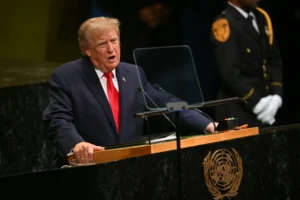
The mass evacuation orders were also criticized by the UN. High Commissioner for Human Rights Volker Türk said the expulsion of hundreds of thousands of people raises serious concerns about international humanitarian law, especially the risk of forced population transfer.
While attacks hit the capital, fighting was also reported in southern Lebanon. The UN peacekeeping mission in the country, UNIFIL, said it had observed clashes in the border region, including an exchange of fire west of the town of Kfar Kila and airstrikes near Khiyam.
The Israeli Army claimed to have expanded its positions along the border and advanced into areas of southern Lebanon, while Hezbollah claimed to have attacked Israeli forces in locations such as Maroun al-Ras and Kfar Kila. The group also released images they claim show an Israeli tank struck by a missile.
Read also: UN agency says it sees no evidence of nuclear weapons in Iran
Read also: UN condemns US and Israeli attacks on Iran and demands ceasefire
Source: vermelho.org.br