Published 02/20/2026 12:35 | Edited 02/20/2026 13:19
The Argentine Chamber of Deputies approved in the early hours of this Friday (20) President Javier Milei’s labor reform, which facilitates layoffs, extends the working day to up to 12 hours and restricts the right to strike, deepening precariousness and dismantling historical rights of Argentine workers.
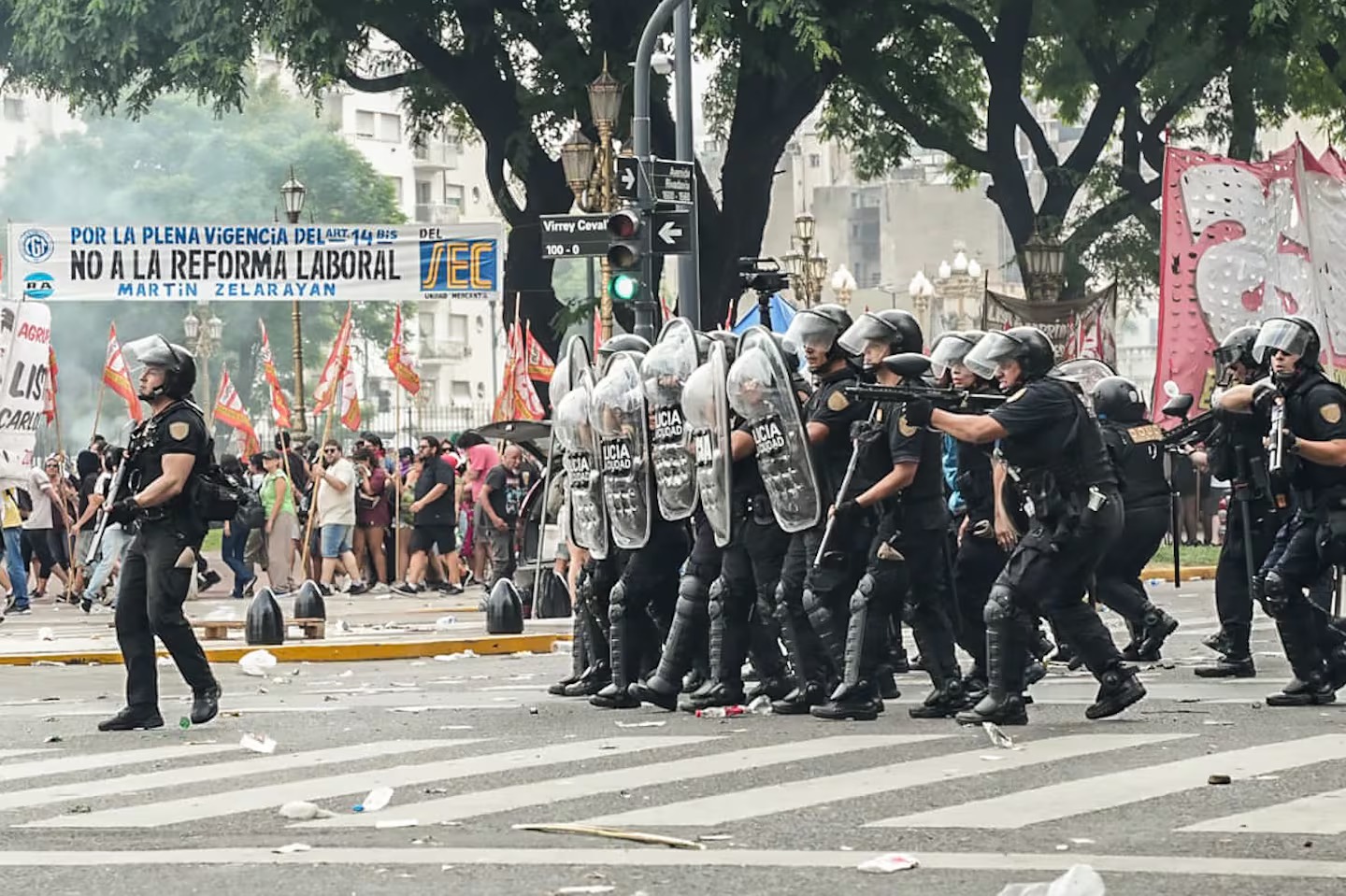
The vote took place under police repression against protesters and in the midst of a 24-hour general strike called by trade unions in opposition to the reform.
The project’s progress was marked by a tight quorum and disputes in the plenary. The proposal had been approved by the Senate the previous week, with changes, and advanced in the Chamber by 135 votes in favor and 115 against, with no abstentions.
To guarantee the vote, the government had the support of deputies linked to allied governors, including those of Peronist origin, which generated criticism from the opposition.
The approved text changes central points of Argentine labor legislation. Among the main changes are the expansion of the daily working day from eight to up to 12 hours, the creation of the hour bank — which allows overtime payments to be replaced with future compensation — and the reduction in dismissal payments, which are now calculated only on the basic salary, excluding items such as 13th salary, vacations and additional payments.
The reform also fragments the vacation period, expands the list of activities considered essential — which imposes stricter limits on strikes — and creates the Labor Assistance Fund (FAL), a mechanism criticized by unions and opposition parliamentarians for diluting the cost of layoffs and socializing losses.
For deputy and union leader Sergio Palazzo, the project “does not have a single line that benefits workers, but there are benefits for businesspeople”.
Another central axis of the text is the precariousness of work relationships. The reform removes entire categories from labor legislation, such as digital platform workers, who are now classified as “independent providers”, and revokes the Teleworking Law, in force since 2021.
Historical professional statuses, such as those of journalists, commercial travelers and hairdressers, are also eliminated. For deputy Horacio Pietragalla, this is a broad setback: “This law takes us back to slavery”, he stated in the plenary.
During the session, the Kirchnerist bloc Unión por la Patria tried to return the project to the committees, but without success.
The leader of the bench, Germán Martínez, accused the government of articulating the vote through informal agreements, stating that “different packages were offered” to guarantee a quorum and favorable votes. Representative Luis Basterra declared that the reform is “absolutely contrary to workers’ rights” and could not be supported by those who claim to be Peronists.
The withdrawal of one of the most controversial articles — which provided for a reduction in salary paid during sick leave — forces the text to return to the Senate, where the government is trying to complete approval before the start of ordinary sessions in March.
Opposition parliamentarians have already indicated that, if sanctioned, the reform will be challenged in court for violating constitutional guarantees and the principle of non-regression of social rights.
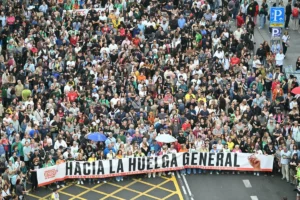
The approval occurred in a scenario of strong social mobilization. The trade unions called for a 24-hour general strike against the reform, with an estimated 90% membership, which paralyzed transport, affected hundreds of flights and emptied the streets of Buenos Aires.
Unions and social movements gathered in front of Congress while the Chamber voted on the project.
The protests were harshly repressed by security forces, using water jets and pepper gas. At least 14 people were detained. The government classified the strike as “extortion”, while union leaders denounced that the reform deepens precariousness.
The general secretary of the CTA, Hugo “Cachorro” Godoy, stated that “all, absolutely all articles are against workers and in favor of a very small group of businesspeople” and warned that the approval of the project “closes a cycle of historic setbacks”.
Source: vermelho.org.br