Published 02/20/2026 13:12 | Edited 02/20/2026 14:19
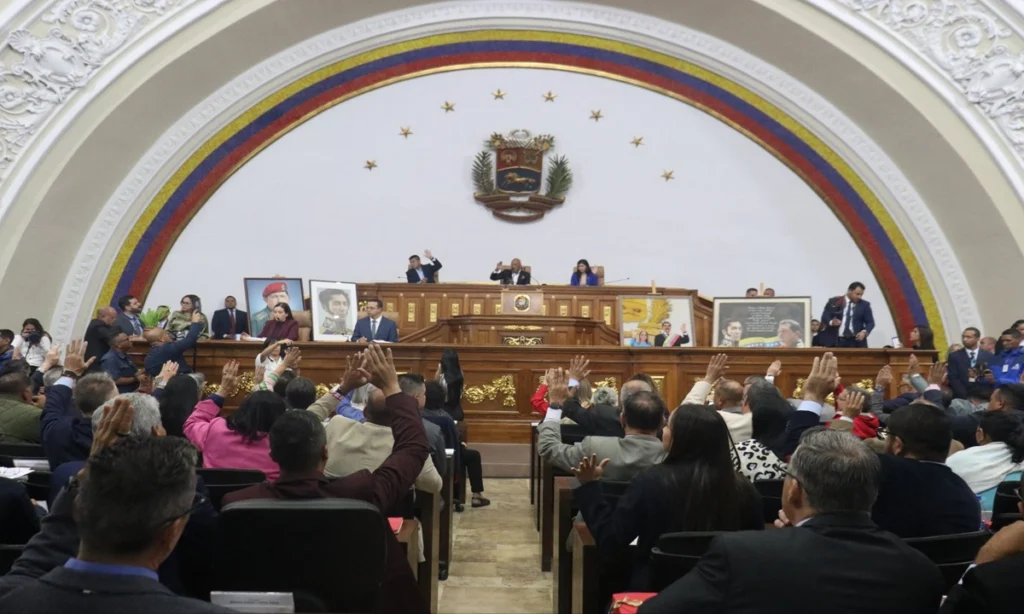
The National Assembly of Venezuela unanimously approved, this Wednesday (19), the Amnesty Law for Democratic Coexistence, sanctioned on the same day by the president in charge Delcy Rodríguez.
The new legislation establishes mechanisms to end legal proceedings linked to political conflicts that occurred between 2002 and 2025, while expressly excluding serious crimes, such as human rights violations, homicide and corruption.
The promulgation ends a process of political negotiation that, according to Parliament itself, involved representatives of the government, the opposition and different institutional sectors of the country.
The Amnesty for Democratic Coexistence Law creates a legal framework for the closure of legal proceedings related to episodes of political confrontation recorded over more than two decades. The period ranges from the coup d’état of April 2002 to the conflicts associated with the regional and legislative elections held in 2025.
When sanctioning the legislation, Delcy Rodríguez stated that the amnesty seeks to create conditions for the resumption of political coexistence in the country.
According to her, the objective is to allow Venezuela to “rediscover itself and learn to live democratically”, leaving behind cycles marked by polarization. For the president in charge, the unanimous approval of the law demonstrated “political maturity” among the different actors involved.
From a practical point of view, the rule establishes procedures for applying amnesty, including the role of the Judiciary in verifying requests.
The text provides a period of up to 15 days for analyzing cases and authorizes people who are outside the country to request the benefit through legal representation, without risk of arrest for the facts covered, as long as they later appear in court to formalize the measure.
The scope of the law is limited to 13 specific political facts, listed in the approved text. Among them are the 2002 coup d’état, the business and oil strike of 2002 and 2003, the conflicts surrounding the 2004 recall referendum, protests recorded at different times between 2007 and 2017 and episodes of political instability linked to more recent electoral disputes, including the 2024 presidential and 2025 regional elections.
Despite the temporal scope, the legislation imposes clear limits. Crimes considered serious, such as human rights violations, intentional homicide, drug trafficking and corruption, are excluded from the amnesty.
People involved in armed actions or supporting foreign initiatives against Venezuelan sovereignty also do not benefit.
According to the government, the distinction seeks to prevent the amnesty from being interpreted as impunity. The logic defended is to close processes linked to political disputes, without extending the benefit to crimes that cannot be relativized by the institutional context.
With the presidential sanction, it will now be up to the Justice bodies to apply the law on a case-by-case basis, after its official publication.
Delcy Rodríguez also requested that bodies of the Judiciary and programs aimed at democratic coexistence analyze situations not explicitly foreseen in the text, in a movement that the government defines as part of a broader effort at political pacification.
Source: vermelho.org.br