Published 02/12/2026 10:16 | Edited 02/12/2026 15:07
Even under public threat of political retaliation made by Donald Trump, six Republican deputies broke with the party leadership and voted with the Democrats to approve, by 219 to 211, a resolution that revokes the tariffs imposed on Canada.
The measure, approved this Wednesday (11), represents the Chamber’s first formal demonstration against the president’s tariff policy since his return to the White House.
The decision, however, has limited practical effect, as the text will still pass through the Senate and, once approved, will be vetoed by the White House, while Congress does not have a two-thirds majority to override Trump’s veto.
The vote exposed fissures in the Republican caucus in a chamber controlled by the president’s own party. Among the dissenters were Thomas Massie (Kentucky), Don Bacon (Nebraska), Kevin Kiley (California), Jeff Hurd (Colorado), Dan Newhouse (Washington) and Brian Fitzpatrick (Pennsylvania).
The resolution revokes the declaration of national emergency used by Trump to justify the imposition of tariffs on Canadian products. Last year, the president invoked the International Emergency Economic Powers Act (IEEPA) to impose 25% surcharges on imports from Canada, citing failures in border security and the fight against drug trafficking.
During the debate, deputies who supported the repeal of the tariffs stated that there are no elements that justify classifying trade with Canada as a national security emergency.
When imposing the tariffs last year, Trump cited the spread of fentanyl — a synthetic substance associated with the deaths of tens of thousands of people from overdoses in the United States — as one of the reasons for imposing the surcharges.
Official data from the government itself, however, indicate that less than 0.1% of the fentanyl seized in the country in 2023 originated at the Canadian border, an argument mentioned by parliamentarians who questioned the scope of the emergency declaration.
Republicans who defend the maintenance of tariffs argue that the president has the prerogative to use them as an instrument of diplomatic and commercial pressure.
Proponents of the resolution stated that the Constitution gives Congress authority over taxes and tariffs, and that the repeated use of emergency mechanisms excessively expands the Executive’s power.
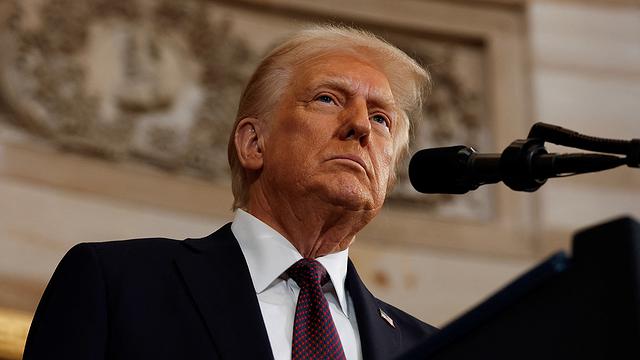
Hours before the vote, Trump took to his social network, Truth Social, to threaten members of his own party who opposed the tariffs. “Any Republican, in the House or Senate, who votes against the tariffs will suffer serious consequences during the election period, and that includes the primaries,” wrote the president, referring to the mid-term legislative elections, which will renew the composition of Congress later this year.
Trump has indicated that he may support opponents against dissident parliamentarians, raising the political cost of any break with his agenda.
The warning occurred while the Republican leadership was still trying to prevent the issue from being voted on in the House. Since last year, the party’s command in the Chamber had been using regulatory instruments to prevent proposals against tariffs from being taken to the plenary.
The night before the vote, however, three Republican deputies joined the Democrats and rejected the attempt to maintain the blockade.
“TARIFFS gave us great National Security, because the mere mention of the word made countries agree with our firmest desires. TARIFFS gave us Economic and National Security, and no Republican should be responsible for destroying this privilege”, stated the president in the same publication.
The deliberation marks the first time, since the beginning of Trump’s second term, that the Chamber has formally positioned itself against the use of tariffs as a central instrument of economic policy.
The result also shows that the president’s control over his bench is not absolute. Although numerically limited, the dissent occurred in a House under the command of the Republican Party itself, contradicting the leadership’s strategy of keeping the issue out of the vote.
Source: vermelho.org.br