Published 02/09/2026 13:15 | Edited 02/09/2026 14:27
“God bless America… that is: Chile, Argentina, Paraguay, Uruguay, Bolivia, Peru, Ecuador, Brazil, Colombia, Venezuela, Guyana, Panama, Costa Rica, Nicaragua, Honduras, El Salvador, Mexico”.
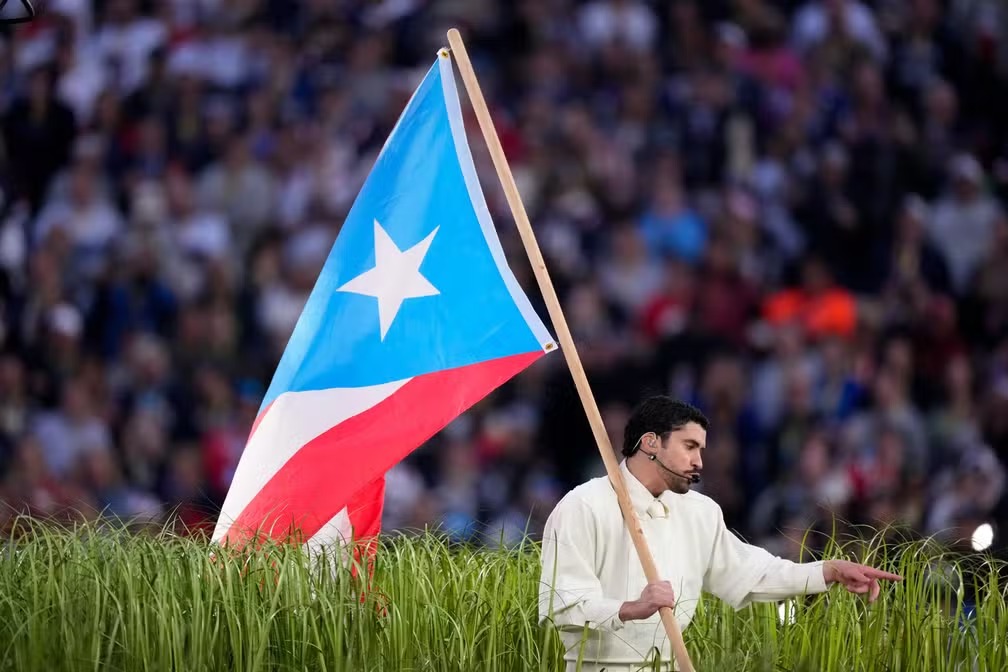
This is how Puerto Rican artist Bad Bunny ended his performance at Super Bowl 60, this Sunday (8), by mentioning Latin American countries in front of millions of spectators around the world and reconfiguring the meaning of the word “America” on American soil.
Benito, the artist’s name, was chosen to perform on the biggest sports and media stage in the United States amid the intensification of policies of violence and repression against immigrants under the government of President Donald Trump — who even publicly criticized the artist’s choice for the halftime show.
After the presentation, Trump spoke again. In a publication on the Truth Social network, he classified the show as “absolutely terrible, one of the worst of all time”, stated that the performance was “an affront to the Greatness of America”” and said that the show represented “a slap in the face of our country”.
He also attacked the fact that the artist sings in Spanish, claiming that “no one understands a word this guy is saying”.
The Puerto Rican is the most listened to artist in the world on streaming platforms since the release of his album I Should Have Taken More Photos (Devia Ter Tirado More Photos)which won the Grammy for Album of the Year — the first time that a work in Spanish has reached the award’s main category.
Launched in January 2025, I should have taken more photosBad Bunny’s most explicit work asserting his Puerto Rican and Latin American identity, was produced as an all-boricua album, a term used to refer to someone from Puerto Rico.
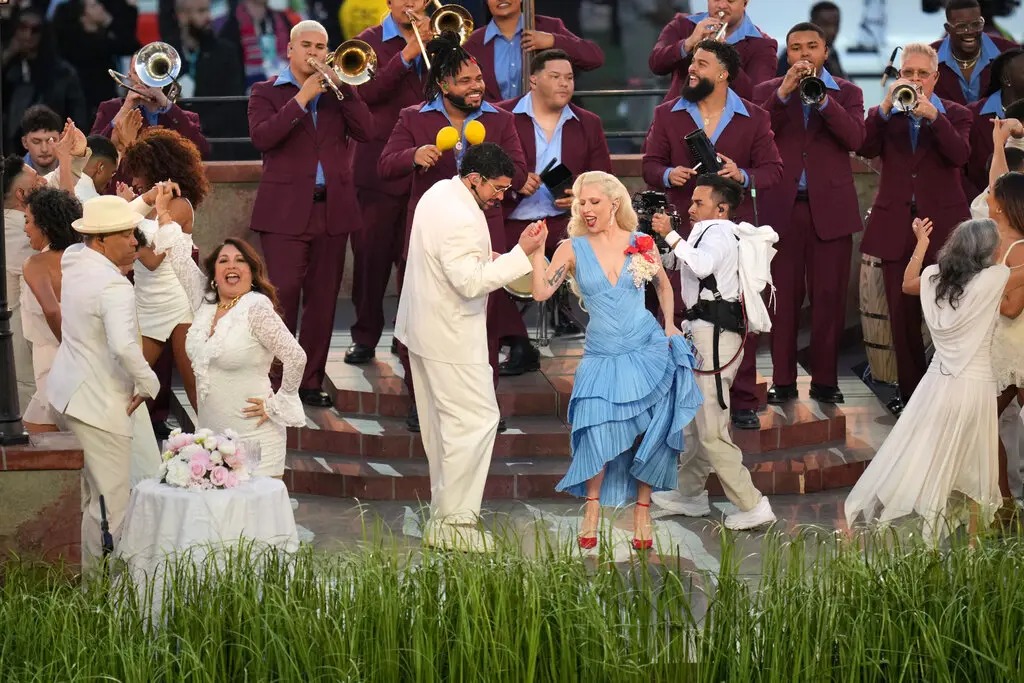
The album revisits the island’s musical history — from salsa to plena, from bolero to reggaeton — as a way of claiming memory, belonging and cultural continuity in a territory marked by colonial conditions.
Puerto Rico is a North American territory colonized after the Spanish-American War of 1898.
Although its inhabitants are North American citizens, the island is not a state and does not have voting representation in Congress or participation in presidential elections, maintaining a political regime distinct from that of the US federated units.
In front of more than 100 million spectators around the world, Bad Bunny presented his songs in Spanish that pay homage to Puerto Rican rural workers and inserted symbols at the center of the show that refer to the island’s history and political disputes.
The performance transformed the stadium’s lawn into a Puerto Rican neighborhood. At the center of the stage, the “casita” already known from his artistic residence on the island served as the axis for the staging, surrounded by references to Caribbean daily life and field workers.
The setlist includes hits like “Tití Me Preguntó”, “Yo Perreo Sola”, “Mónaco” and “Voy a Cargarte Pa PR”, combining reggaeton, salsa and Latin pop.
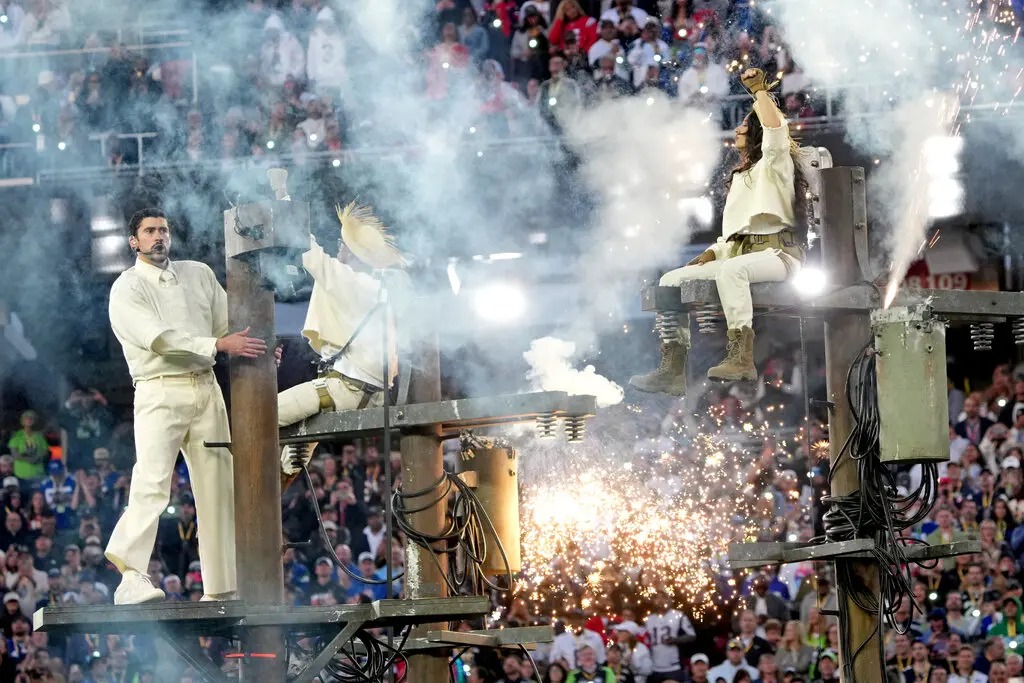
At one point, the scenario simulated a blackout while the singer climbed a power pole, a gesture associated with the crisis in Puerto Rico’s electrical system, marked by prolonged blackouts and criticism of the grid privatization process and the North American management of the island’s infrastructure.
Guests included Lady Gaga, who performed a salsa-influenced version of “Die With a Smile,” and Ricky Martin, who shared the stage with his compatriot in What Happened to Hawaiimusic that establishes parallels between Puerto Rico and other territories incorporated by the United States.
Latin celebrities such as Karol G, Cardi B and Pedro Pascal also attended the performance of Bad Bunny’s “Casita”. At the end, the phrase appeared on the screen: “The only thing more powerful than hate is love”.
Source: vermelho.org.br