Published 06/02/2026 13:27 | Edited 06/02/2026 18:08
The alliance between the international far right and big tech came to the fore again in the offensive against regulatory frameworks. At an event held this week at the European Parliament, in Brussels (Belgium), parliamentarians, religious leaders and ultra-conservative organizations attacked rules that impose liability on digital platforms for illegal content, under the argument of defending “freedom of expression”.
The main target was the European Union’s Digital Services Law (DSA), in force since 2023, which obliges companies to remove content that violates the bloc’s legislation, demands greater transparency about the functioning of algorithms and provides for sanctions for platforms that fail to comply with the rules.
The legislation has been applied in investigations against social networks and digital services accused of failing to protect users, especially children and adolescents, and to combat misinformation.
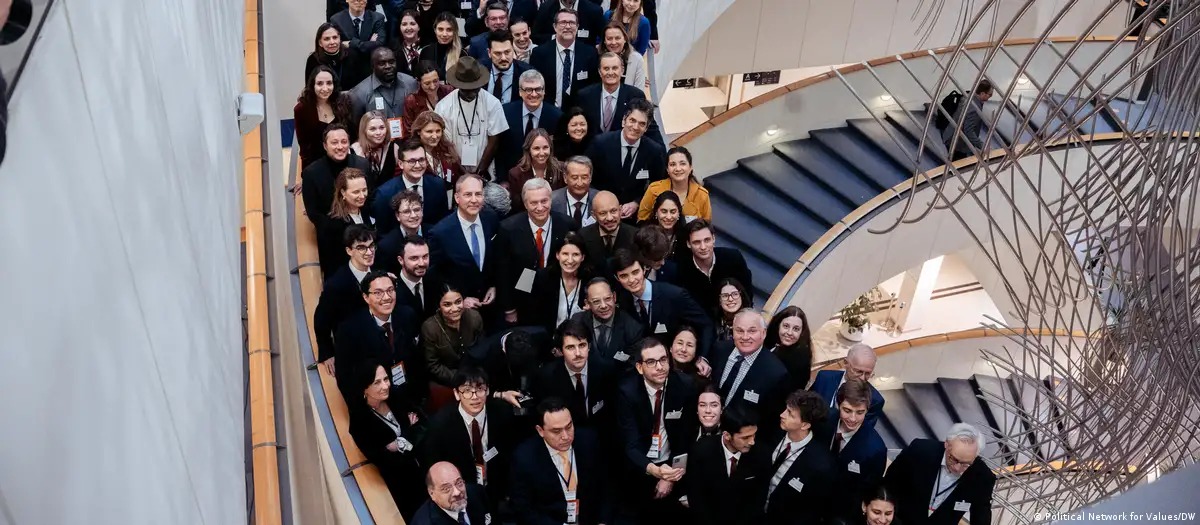
Organized by the Patriotas pela Europa group — which brings together parties such as Chega (Portugal), Vox (Spain) and Fidesz (Hungary) — with support from European Reformists and Conservatives, the forum was attended by names such as the elected president of Chile, José Antonio Kast, and Brazilian deputy Nikolas Ferreira (PL-MG).
Representatives of conservative organizations such as the Heritage Foundation, a North American think tank aligned with deregulation and social conservatism, also participated.
DSA, the focus of the ultraconservative mobilization
The Digital Services Law has become one of the main points of friction between European institutions and global platforms. The rule establishes that companies can be held responsible for omissions in the moderation of illegal content and determines greater transparency in the management of algorithms that amplify publications.
In recent months, the legislation served as the basis for opening investigations against digital services, including investigations into the exposure of minors to violent and sexualized content and the circulation of false material generated by artificial intelligence.
In recent electoral processes, such as that in Slovakia, the DSA was mobilized to contain the coordinated spread of disinformation.
During the meeting in Brussels, reactionary leaders classified this type of regulation as a political censorship mechanism.
The predominant discourse was that the demand for moderation and transparency would limit conservative ideological positions. In countries like Germany, however, hate speech is classified as a crime and the liability of platforms is part of national legislation.
Outside the European Parliament, demonstrators protested against the event, denouncing the exclusionary nature of the agendas defended by the organizers.
Brazil enters the agenda as an example of “interference”
In June 2025, the Federal Supreme Court ruled that digital platforms can be held civilly liable for illegal publications made by users, including incitement to violence and attacks on democratic institutions. The decision establishes that companies must act proactively in removing illegal content.
In August, the federal government presented a bill that complements the Marco Civil da Internet, proposing clearer criteria for the regulation of social networks. The proposal is still being processed.
At the forum in Brussels, Nikolas Ferreira presented a distorted version of the suspension of his social media accounts, attributing the measure to an alleged violation of “freedom of expression” following publications about the Brazilian electoral system.
At the time, he had shared content that questioned electronic voting machines based on allegations later associated with the coup mobilization investigated by the Attorney General’s Office.
The accountability of platforms in Brazil also prompted a reaction from the United States government, which opened an investigation alleging “unfair” practices, expanding the international dimension of the conflict.
Transnational network against accountability
The meeting in Brussels was not an isolated episode. Similar events have already taken place in Bogotá, Madrid and at the UN headquarters in New York, consolidating an international network that brings together far-right parties, conservative organizations and groups aligned with digital deregulation.
A survey by the NGO Global Project against Hate and Extremism identified among the guests public figures associated with the defense of conversion therapies for homosexuals.
Among those present was Ugandan parliamentarian Lucy Akello, a supporter of legislation that provides for the death penalty or life imprisonment for LGBT+ people.
The mobilization against digital regulation occurs at a time when European and Latin American governments are discussing mechanisms to contain misinformation, hate speech and abusive use of data by large platforms.
Source: vermelho.org.br