Published 05/02/2026 17:12 | Edited 05/02/2026 18:15
The planet dawned this Thursday (5) in a state of strategic uncertainty unprecedented since the height of the Cold War. With the official expiration of the Strategic Arms Reduction Treaty (New Start), the world’s two largest nuclear powers — the United States and Russia — no longer have, for the first time in 54 years, limits and oversight mechanisms over their atomic arsenals.
Russia regrets impasse; Trump maintains ambiguity
The Russian government used official channels to express that it deeply regrets the end of the pact. According to the Russian Foreign Ministry, Moscow formally proposed maintaining the quantitative limits for another year to make new negotiations viable, but Vladimir Putin’s proposal did not receive a substantive response from Washington.
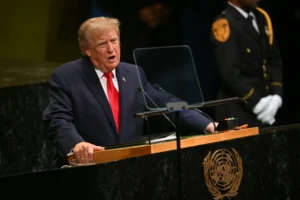
On the other hand, President Donald Trump criticized the treaty as being a “poorly negotiated agreement”, rejected the extension as proposed by Putin and defended a new “improved and modernized” treaty.
Asked about the expiration, Trump simply said: “If it expires, it’s expired. We’ll make a better deal.” The North American plan is to condition a new treaty on the inclusion of China, a proposal that Beijing rejects because it has a significantly smaller arsenal. Meanwhile, Secretary of State Marco Rubio has indicated there are no immediate announcements, leaving the future of nuclear relations in a vacuum.
The risk of a new arms race
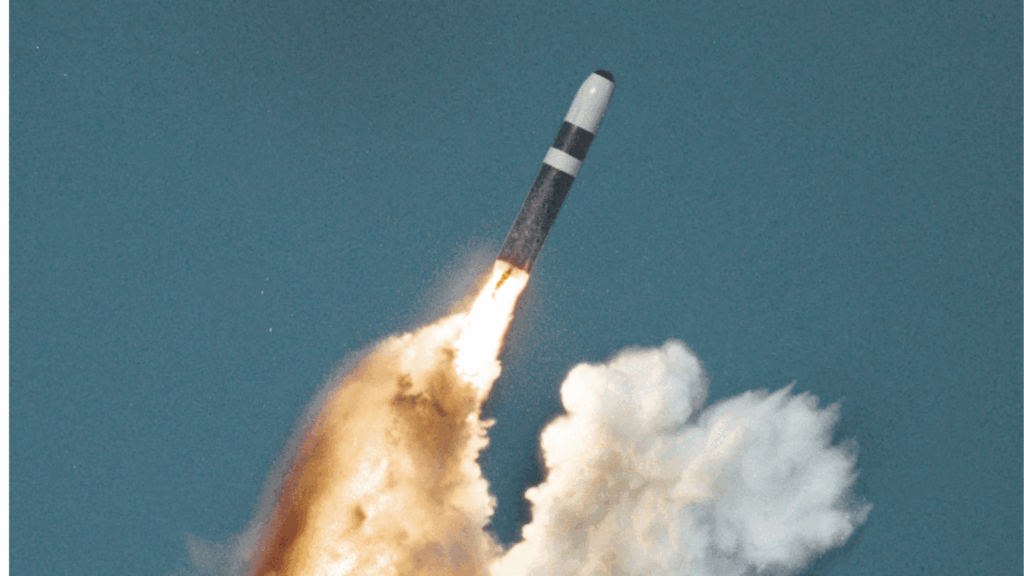
International security analysts warn that we are already experiencing the prelude to a new race for warheads. Trump has already signaled plans to increase the presence of nuclear devices on submarines, focusing on mobility and the power of stealthy retaliation. Without the 18 annual inspections in loco that New Start guaranteed, the world loses transparency, creating a “blind spot” where any military movement can be interpreted as an imminent attack, increasing the risk of a conflict due to miscalculation.
Current arsenal is capable of destroying the world more than 100 times
Despite the reduction in warheads since the 1980s, today’s firepower is more lethal than ever. It is estimated that there are around 12,100 nuclear warheads in the world today. This arsenal is enough to annihilate human civilization more than 100 times over and cause a “nuclear winter,” blocking sunlight for years and collapsing global food production.
Currently, the “Nuclear Club” is made up of nine nations: Russia (with the largest arsenal, around 5,500 warheads), the United States (5,000), China, France, the United Kingdom, Pakistan, India, Israel (undeclared) and North Korea.
The global reaction is alarm
The UN Secretary-General, António Guterres, classified the moment as “very serious”, highlighting that humanity is just one misunderstanding away from annihilation. Observatories such as the Federation of American Scientists (FAS) warn that, without the treaty, the US and Russia will enter an era of “nuclear anarchy”, where containment gives way to technological and quantitative expansion.
For Brazil and the Global South, which historically defend multilateral disarmament, the scenario requires renewed diplomatic pressure for the superpowers to return to the negotiating table before the new arms race becomes irreversible.
Source: vermelho.org.br