Published 02/04/2026 09:41 | Edited 02/04/2026 11:40
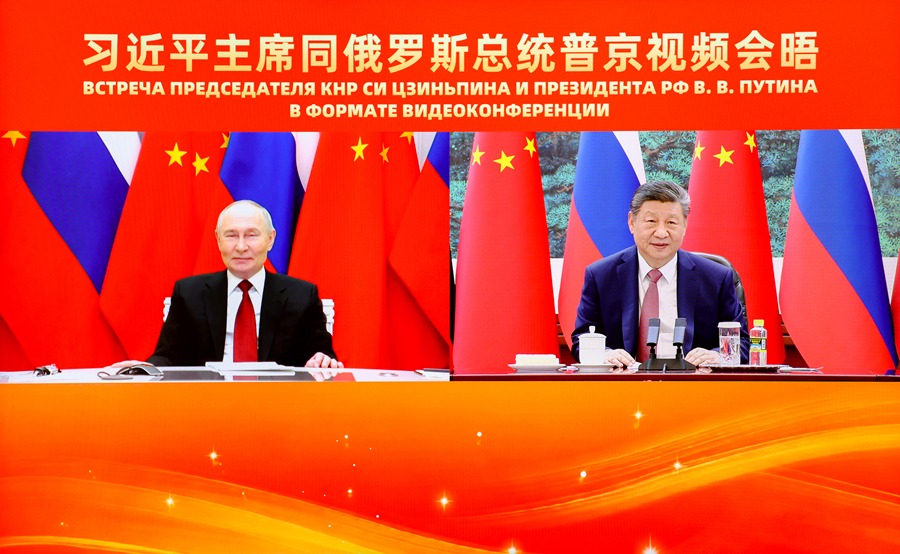
The presidents of China and Russia held a video conference this Wednesday (4) in which they praised the level of bilateral relations and defended the deepening of strategic cooperation between the two countries.
In a broadcast released by the Kremlin, Putin stated that the relationship between Moscow and Beijing works as “an important stabilizing factor” in a scenario of “increasing global turbulence”.
The Russian president highlighted that 2026 marks the 25th anniversary of the Treaty of Good Neighborhood and Friendly Cooperation and stated that the partnership serves the “fundamental interests” of the two nations.
Xi Jinping, in turn, declared that Sino-Russian relations are moving “in the right direction” and defended the development of a “grand plan” to further expand bilateral ties. The Chinese leader reiterated his willingness to coordinate positions with Moscow on issues considered strategic and reaffirmed support for the sovereignty and security of both countries.
The conversation between the presidents takes place amid a sequence of high-level meetings between Chinese and Russian authorities in early February, reiterating the political alignment between the two countries and reinforcing the discourse of building a “new era” in bilateral relations.
The meetings involved leaders with institutional weight in the areas of foreign policy, security and parliamentary coordination, in an international context marked by geopolitical disputes and reconfiguration of alliances.
On Sunday (1st), Chinese Foreign Minister Wang Yi met with the Secretary of the Russian Security Council, Sergei Shoigu, in a meeting described by Beijing as focused on “strategic communication”.
According to information released by the Chinese government, the visit took place at the request of President Vladimir Putin. In the dialogue, both sides mentioned what they classified as a “period of great turbulence and complexity” in the international order.
Wang stated that China and Russia are “comprehensive strategic cooperation partners for a new era”, an expression that appeared again in official statements in the following days.
The chancellor defended the strengthening of the role of the United Nations and the defense of multilateralism, even though the speech is part of a broader debate on transformations in the international system.
Political coordination
On Monday (2), the chairman of the Russian State Duma’s International Affairs Committee, Leonid Slutsky, was also in Beijing for meetings with Chinese leaders, including Wang Huning, member of the Standing Committee of the Political Bureau of the Communist Party of China and president of the Chinese People’s Political Consultative Conference.
The content of public statements maintained the emphasis on intensifying diplomatic and economic cooperation in the face of the global scenario described as unstable.
At a press conference at the Ministry of Foreign Affairs, spokesperson Lin Jian reiterated that the two countries “maintain close communication on key issues relating to bilateral relations, support each other on issues involving their fundamental interests, and effectively safeguard their respective and common interests.”
The discursive convergence indicates consistent political coordination between Beijing and Moscow, with an emphasis on defending interests considered strategic by both governments.
The sequence of meetings, involving both the diplomatic, parliamentary and security axis, signals that the bilateral relationship continues to be structured on multiple institutional fronts.
Insertion into international dynamics
The rapprochement occurs amid debates about transformations in the global architecture of power. China has expanded its economic and diplomatic projection, including efforts to internationalize its currency and strengthen alternative multilateral forums.
Russia seeks to consolidate its strategic position and preserve its geopolitical interests, especially in Europe and Eurasia.
Although official statements emphasize multilateralism, the Sino-Russian articulation is part of a broader context of international rebalancing, in which great powers seek to adapt to changes in the correlation of global forces.
The intense agenda recorded in the first days of February reinforces the perception that Beijing and Moscow maintain continuous coordination to face external pressure and redefine spaces of influence in the so-called “new era” of international relations.
Source: vermelho.org.br