Published 01/29/2026 08:41 | Edited 01/30/2026 12:52
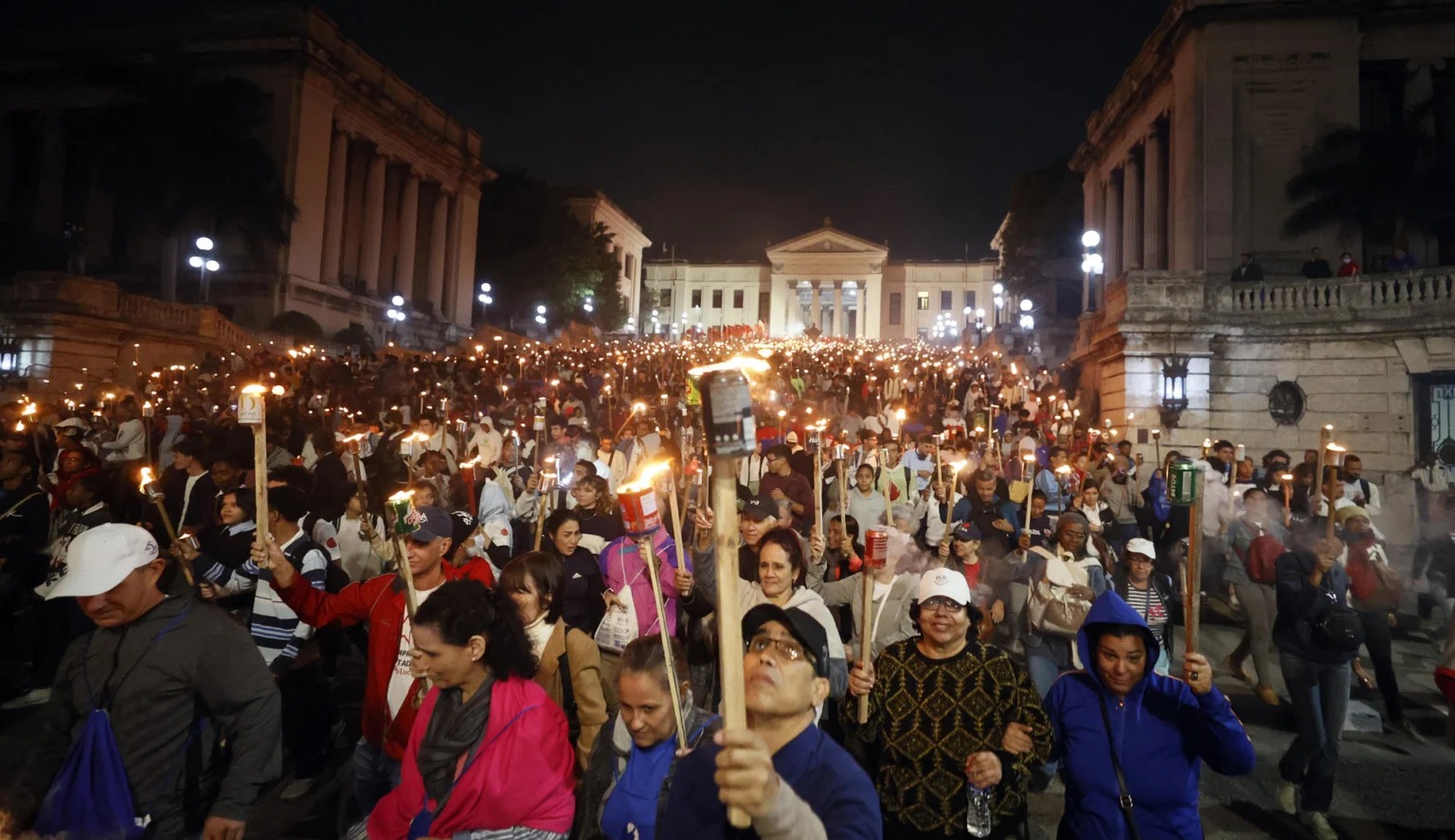
Thousands of Cubans marched through the streets of Havana on Tuesday night (27) in protest against United States threats and aggressions against the island’s sovereignty. The mobilization is part of the traditional Torch March and was marked by the confrontation of North American imperialism and the defense of the Cuban revolutionary project.
The march brought together mostly young students, who walked through the streets of the capital carrying torches and Cuban flags, on a route that included the steps of the University of Havana, a symbolic location for student mobilization in the country.
President Miguel Díaz-Canel participated in the event and walked alongside the protesters.
Traditionally held on the night of January 27th, the eve of José Martí’s birth anniversary, the Torch March is one of the most emblematic political acts on the Cuban calendar.
The mobilization refers to the march organized in 1953 by students led by Fidel Castro, then a university student, in defiance of the dictatorship of Fulgencio Batista.
In 2026, the march acquired an expanded political significance as it coincided with the centenary year of the birth of the historic leader of the Cuban Revolution.
The act takes place amid the recent escalation of tensions between Havana and Washington, intensified after the military operation conducted by the United States against Venezuela in early January, which culminated in the capture of President Nicolás Maduro, a historic ally of Cuba.
Since then, the North American government has increased pressure on the Caribbean island, combining political threats, diplomatic hardening and signs of economic isolation.
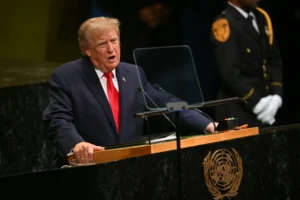
In the days following the offensive against Caracas, United States President Donald Trump began to publicly state that Cuba should “reach an agreement” with Washington, without specifying the terms or nature of this demand.
In Havana, the statements were interpreted as part of a strategy of regional intimidation, aimed at weakening governments that resist North American hegemony on the continent.
The combination of tributes to Martí and Fidel reinforces the character of historical continuity of the revolutionary project, articulating national independence, sovereignty and resistance to imperialism.
During the event, student leaders highlighted that the mobilization is not restricted to a symbolic ritual. “This is not an act of nostalgia, it is a call to action,” said Litza Elena González Desdín, president of the Federation of University Students (FEU), in front of thousands of young people gathered at the University of Havana.
The young people highlighted that the mobilization reaffirms the commitment to defending Cuban sovereignty in an international scenario marked by new forms of political, economic and military aggression.
Even amid the economic difficulties faced by the country, worsened by the blockade imposed by the United States, protesters highlighted that external pressure did not weaken popular support for the revolutionary project.
“We may have thousands of problems, but Cubans are not afraid, even though we want peace,” said a worker who participated in the event in Havana.
The Torch March also incorporated an explicit regional dimension, with demonstrations of solidarity with the Venezuelan people and demands for the release of President Nicolás Maduro and his wife, Cilia Flores.
Posters and slogans denounced the United States’ action as a violation of human rights and the sovereignty of a Latin American country.
Protesters stated that the offensive against Venezuela represents a threat not only to Caracas, but to all countries that seek autonomous paths of development and regional integration.
The defense of Venezuelan sovereignty was presented as an inseparable part of the anti-imperialist struggle on the continent.
“The action carried out on January 3rd by the Americans is an act against human rights,” declared one of the participants, demanding Maduro’s return to his country. For organizers, the mobilization in Havana reinforces Cuba’s role as a historical reference for resistance to external interventions in Latin America.
Source: vermelho.org.br