Published 01/27/2026 14:54 | Edited 01/27/2026 18:54
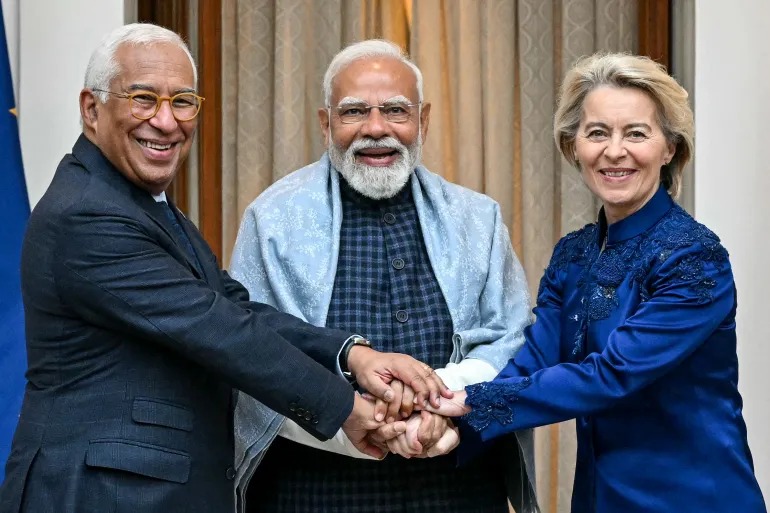
India and the European Union announced this Tuesday (27) the conclusion of a historic free trade agreement that will connect almost two billion consumers, reduce tariffs on more than 90% of European goods and expand access for EU companies to the Indian market.
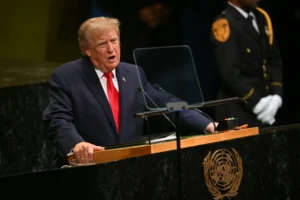
The understanding is interpreted by authorities and analysts as a direct response to the advance of United States protectionism under the Donald Trump administration, amid the reorganization of global trade alliances.
“Europe and India are making history today. This is just the beginning,” said European Commission President Ursula von der Leyen when announcing the agreement.
For Indian Prime Minister Narendra Modi, the agreement “will bring great opportunities for the 1.4 billion inhabitants of India and for the millions of people in Europe”.
Under the agreement, the European Union will eliminate or reduce tariffs on around 99.5% of products imported from India over a period of up to seven years, while New Delhi has committed to cutting tariffs on more than 90% of European goods, according to data released by both parties.
The EU estimates that the measure will result in annual savings of around 4 billion euros in tariffs for companies in the bloc.
One of the main points of understanding is the gradual opening of the Indian market to European industrial products.
Tariffs on cars manufactured in the EU, currently up to 110%, will be progressively reduced by up to 10%, applying to an annual quota of up to 250,000 vehicles. The measure should benefit automakers such as Volkswagen, Renault, Mercedes-Benz and BMW.
The agreement also provides for the reduction or elimination of tariffs on machinery, electrical equipment, chemicals, pharmaceuticals, iron and steel exported by the European Union. In the case of alcoholic beverages, India will immediately reduce tariffs on wine from 150% to 75%, with additional cuts expected over the next few years.
On the Indian side, the European Union committed to zeroing tariffs on products such as fish, textiles, leather, rubber, basic metals, chemicals and jewelry, expanding access for labor-intensive sectors to the European market.
Sensitive agricultural products such as rice, sugar, soybeans, beef and dairy products were left out of the agreement.
The formal signing of the treaty will take place after a legal review process that should last between five and six months. According to authorities on both sides, the agreement is expected to come into force within a year, although the text may still face political resistance in the European Parliament, as recently occurred with the agreement between the EU and Mercosur.
The agreement between India and the European Union is part of a movement on both sides to expand trade agreements and reduce exposure to instability caused by President Donald Trump’s tariff policy.
Since the Republican’s return to the White House, the United States has once again imposed or threatened high tariffs against strategic partners, affecting both emerging economies and historic European allies.
In the European case, Washington’s tariff offensive — which includes threats against countries that resisted Trump’s attempt to annex Greenland and pressure on trade allies — led Brussels to accelerate negotiations and conclude agreements considered priorities.
In addition to the pact with India, the European Union recently signed an agreement with Mercosur and made progress on treaties with Southeast Asian countries, in an effort to assert itself as a stable commercial hub in a scenario of fragmentation of global rules.
India, in turn, was directly hit by the US’s protectionist escalation, which imposed tariffs of up to 50% on Indian products and trade sanctions related to the purchase of oil and gas from Russia.
The agreement with the EU appears, in this context, as part of a deliberate policy of market diversification and reducing dependence on trade with the United States.
Analysts interviewed by the international press assess that the understanding between Brussels and New Delhi has symbolic weight at a time of weakening of the multilateral trade system and paralysis of the World Trade Organization (WTO).
By deepening ties between two major economies outside the Washington-Beijing axis, the agreement signals a coordinated response by middle powers to the tariff war and the unpredictability of North American trade policy.
Source: vermelho.org.br