Published 01/27/2026 15:12 | Edited 01/27/2026 15:34
China raised its tone against the United States when reacting to the Donald Trump administration’s measures against Cuba. This Tuesday (27), Chinese Foreign Ministry spokesman Guo Jiakun urged Washington to “immediately put an end” to the blockade and sanctions imposed on the island, classifying them as violations of international law that “deprive the Cuban people of the right to survival and development”.
According to Guo, US policy not only worsens the Cuban economic crisis, but also undermines regional peace and stability. For Beijing, this is a strategy of coercion that penalizes the civilian population and reinforces unilateral practices historically condemned in multilateral forums.
Chinese support for Havana in response to US pressure
In direct response to the tightening of sanctions under Trump, China announced that it “will continue to provide support and assistance to Cuba within its capabilities.” The position comes after reports indicate that the White House is considering a total blockade of oil imports destined for the island, a measure also considered “alarming” by Russia.
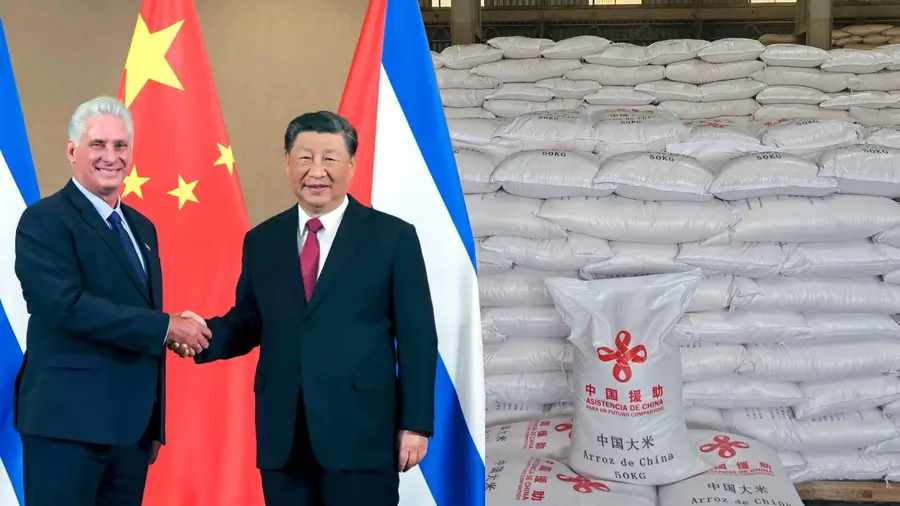
Beijing already approved, in January, an emergency aid package for Cuba, which includes US$80 million in financial assistance and the donation of 60 thousand tons of rice. For the Cuban government, these initiatives contrast with North American policy, seen as the main external factor behind fuel shortages, frequent blackouts and an abrupt drop in tourism.
Economic crisis and the weight of US sanctions
Cuba is experiencing one of the worst crises in its recent history. The collapse of tourism, the shortage of basic products and the energy crisis are worsened, according to Havana, by the tightening of US sanctions. Official data indicate that the country lost almost US$8 billion in revenue between March 2024 and February 2025 due to the restrictions imposed by Washington.
Coordination with Russia as a geopolitical counterweight
The Chinese position on Cuba occurs in parallel with the strengthening of strategic coordination with Russia. In a video conference this Tuesday, Chinese Defense Minister Dong Jun told his Russian counterpart Andrei Belousov that Beijing is willing to “strengthen strategic coordination” and jointly improve its ability to respond to global risks.
According to Chinese media, both countries see US actions in regions such as Venezuela, Iran and the Caribbean as signs of instability that require constant analysis and coordinated responses. Moscow classified the possibility of a total energy blockade on Cuba as “alarming”, reinforcing the view that Washington is increasing simultaneous pressure fronts.
Multilateralism versus unilateralism
For Beijing, the confrontation over Cuba symbolizes a broader clash between models of international order. By openly criticizing the US, China presents itself as defending multilateralism and respect for sovereignty, while accusing Washington of resorting to sanctions, blockades and interventions as instruments of foreign policy.
In this context, support for Havana and the intensification of the partnership with Moscow serve as clear political signals: in the face of Trump’s offensive, Beijing is betting on articulation with allies to contain North American influence and denounce the human cost of sanctions imposed by the United States.
Source: vermelho.org.br