Published 01/23/2026 11:03 | Edited 01/23/2026 11:38
The President of the United States, Donald Trump, launched this Thursday (22), at the World Economic Forum in Davos, the so-called “Peace Council”. The initiative is criticized for trying to undermine the role of the UN by creating a parallel instance of international governance and for concentrating unprecedented powers in the hands of the North American president himself.
Presented by the United States government during the forum, the council was announced as a structure designed to oversee the maintenance of the ceasefire, transitional administration and reconstruction of the Gaza Strip.
However, statute documents indicate that the body is not limited to Palestinian territory and do not even make explicit mention of Gaza, leaving room for the council to act in any international conflict.
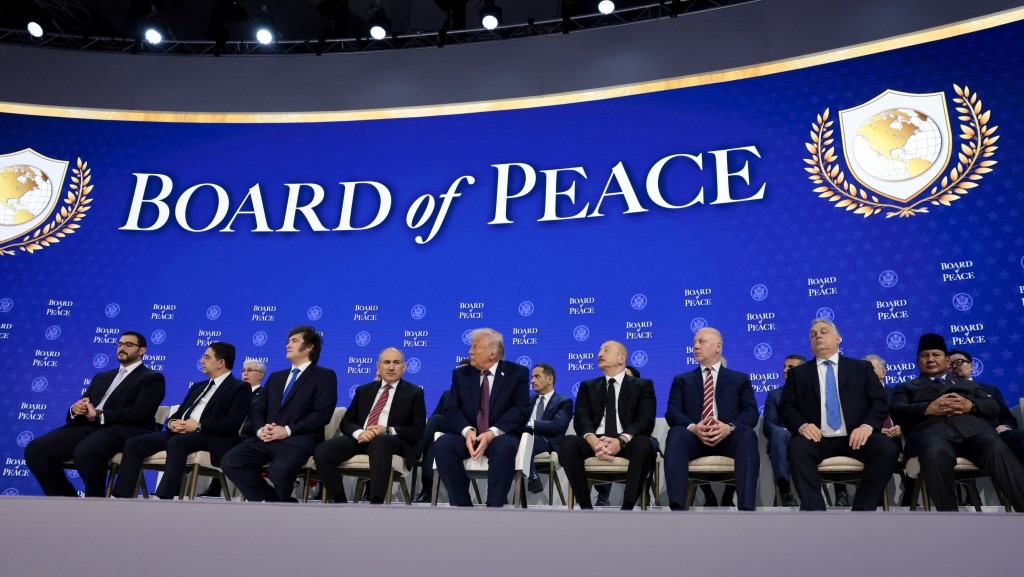
At the launch ceremony in Davos, representatives from 19 countries took the stage to sign the document that formalizes the creation of the council.
Among the signatories were the presidents of Argentina, Javier Milei, of Paraguay, Santiago Peña, of Azerbaijan, Ilham Aliyev, the Prime Minister of Hungary, Viktor Orbán, the President of Indonesia, Prabowo Subianto, and the President of Kosovo, Vjosa Osmani.
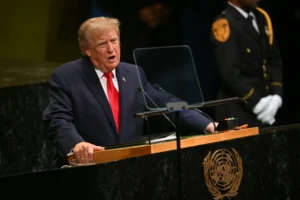
During his launch speech, Trump stated that the council will be authorized to “do practically anything we want” and again criticized the UN.
The institutional design and launch of the Peace Council, however, provoked critical reactions from governments, diplomats and analysts, who point out risks to multilateral governance, transparency and the international legitimacy of the initiative.
Furthermore, the concentration of powers attributed to the President of the United States draws attention.
According to the draft charter of the council, Donald Trump will serve as president of the body for an indefinite period of time, with broad executive prerogatives, including veto power over decisions, authority to dismiss members and centralized control over the functioning of the new structure.
European diplomats and governments interviewed by the international press assess that the initiative represents an attempt to create a parallel instance of global governance, outside the UN and its formal deliberation mechanisms.
A European diplomat cited by the agency Reuters stated that the council resembles a “Trump’s UN”, as it ignores central principles of the United Nations Charter and concentrates decisions outside recognized multilateral forums.
The US president’s own statements reinforced this perception. When launching the council, Trump stated that he “never even spoke to the UN” and that the new body could “do practically anything we want”.
For analysts, the combination of direct criticism of the UN and the creation of a new structure under the exclusive leadership of the United States signals a movement towards the deliberate emptying of multilateralism.
This reading helps explain the resistance expressed by governments, which see the council as a dangerous precedent for the fragmentation of global governance.
The central concern is that decisions on international conflicts will be taken in ad hoc forums, led by great powers, without the institutional brakes and consensus required within the United Nations.
Limited membership and refusal from key countries
Despite Trump stating that “all countries want to be part of” the Peace Council, concrete support for the launch is, so far, limited.
Only representatives from 19 countries participated in the signing of the document in Davos, in an event marked by the absence of major Western allies of the United States, such as France, Germany, the United Kingdom, Canada and Japan.
Some European governments have announced explicit rejection of the initiative. France, a central power in the European Union and a permanent member of the UN Security Council, also did not join the Peace Council.
The French have declared reservations about the creation of a new international body outside the United Nations system.
Norway and Sweden also informed that they will not join the council, while Italy stated that it is still evaluating the terms of the statute before making a decision.
In the United Kingdom, authorities indicated legal and political concerns, in addition to questioning the possibility of Russia’s participation in a body presented as aimed at promoting peace.
For diplomats consulted by international agencies, the small number of signatories at the launch and the caution of central countries in the international system weaken the legitimacy of the council and reinforce the assessment that it is an initiative politically aligned with a specific group of governments, and not a mechanism with broad support from the international community.
Source: vermelho.org.br