Published 01/21/2026 18:44 | Edited 01/21/2026 19:26
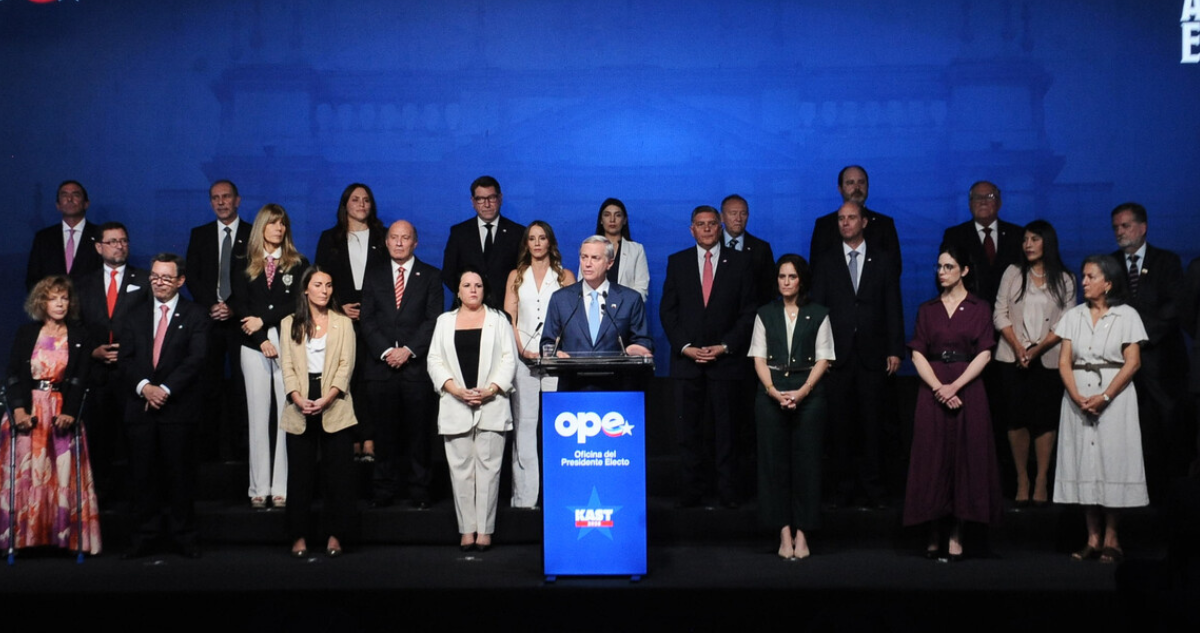
The appointment, on Tuesday (20), of Fernando Rabat and Fernando Barros — both former lawyers of the dictator Augusto Pinochet — to the ministries of Justice and Human Rights and Defense, respectively, provoked a wave of criticism in Chile. For 16 organizations of family members of disappeared and executed political detainees, President José António Kast’s decision is “a direct offense to the memory of the victims of the dictatorship”.
Alicia Lira, president of the Association of Relatives of Politically Executed Persons, classified the gesture as “a huge setback” in the progress achieved in recent decades in matters of justice and truth. “These appointments reflect Kast’s denialist policies regarding human rights,” he told EFE.
From Riggs to London: ties with the Pinochet regime
Fernando Rabat, an academic at the University of Development, was part of the legal teams that defended Pinochet in emblematic cases, such as “Operation Colombo” — a hoax set up to cover up the disappearance of 119 opponents — and the “Riggs Case”, about the dictator’s secret accounts in the USA.
Furthermore, it is linked to the office of the late Pablo Rodríguez, leader of the far-right paramilitary Patria y Libertad, who violently fought the government of Salvador Allende.
Fernando Barros was Pinochet’s spokesman and lawyer during his imprisonment in London (1998–2000) and, for more than 30 years, represented former president Sebastián Piñera. Both will now assume central positions in a government that is announced as an “emergency”.
Risk to the National Search Plan for missing persons
One of the biggest concerns of human rights organizations is the future of the National Plan for the Search for Detained and Disappeared Persons, created by Gabriel Boric’s government. Flor Lazo, from the Association of Relatives of Detained and Disappeared Persons in Paine — one of the regions most affected by the repression — fears that Rabat, head of the Human Rights department, will interrupt the program.
“If the search plan ends, we will rebel. Our hope is to find all the victims,” he declared. The portfolio, until then held by a Communist Party minister, was seen as a landmark of historical reparation; now, it runs the risk of being emptied by those who defended its tormentor.
Frente Ampla denounces “cabinet inherited from Pinochet”
The opposition also reacted harshly. Congresswoman Lorena Fries, from the Frente Amplio, accused Kast of setting up a “cabinet that is politically heir to Augusto Pinochet”. “Many of us hoped this would be a thing of the past”, he lamented, highlighting the contradiction of a government that talks about the “human right to security”, but avoids measures against financial opacity. For her, the presence of figures linked to the military regime in positions that represent the entire Chilean people highlights a serious political and symbolic problem.
Fries also criticized the concentration of businesspeople and executives linked to economic power — such as Daniel Mas (Economy and Mines) and Francisco Pérez Mackenna (Foreign Affairs) —, seeing it as a “great authoritarian enterprise” disguised as technical management. But it is the target of criticism for possible favoritism to the business sector to the detriment of communities and territories
Kast and the family legacy with the dictatorship
During the campaign, Kast avoided direct references to the military regime and did not clarify his position on pardons for those convicted of crimes against humanity. However, his personal trajectory reinforces, for critics, the reading of ideological continuity. The appointments of Rabat and Barros deepened this perception.
José Antonio Kast, who will become on March 11 the first president openly aligned with Pinochet since the return of democracy, already carries this legacy in his career. During the 1988 plebiscite, he campaigned for the dictator to continue. His brother, Miguel Kast, was a key minister in the regime and a member of the “Chicago Boys”, architects of Chilean neoliberalism.
Rinternational impact and democratic alert
International vehicles and human rights organizations highlighted that Chile, a country often cited as a regional reference for democratic transition, now faces a symbolic and political test. The arrival of former Pinochet defenders at the helm of Justice and Defense was interpreted as a sign of the relativization of the dictatorship’s crimes and the weakening of the democratic consensus built since the return to civil rule.
For critics, the political gesture reopens disputes about memory, truth and justice in Chile. Now, by appointing the general’s defenders to sensitive posts, Kast signals that he not only intends to govern with a tough hand, but to rewrite the country’s historical narrative — erasing responsibilities and normalizing the authoritarian past. For many Chileans, however, this story still bleeds. And it will not be forgotten.
Source: vermelho.org.br