Published 01/16/2026 10:45 | Edited 01/16/2026 11:11
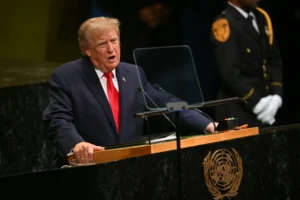
The President of the United States, Donald Trump, announced on Thursday (15) the second phase of the North American plan for the Gaza Strip, which envisages the creation of a Peace Council and a transitional Palestinian government under international supervision, with the demilitarization of Hamas as one of the central axes of the initiative.
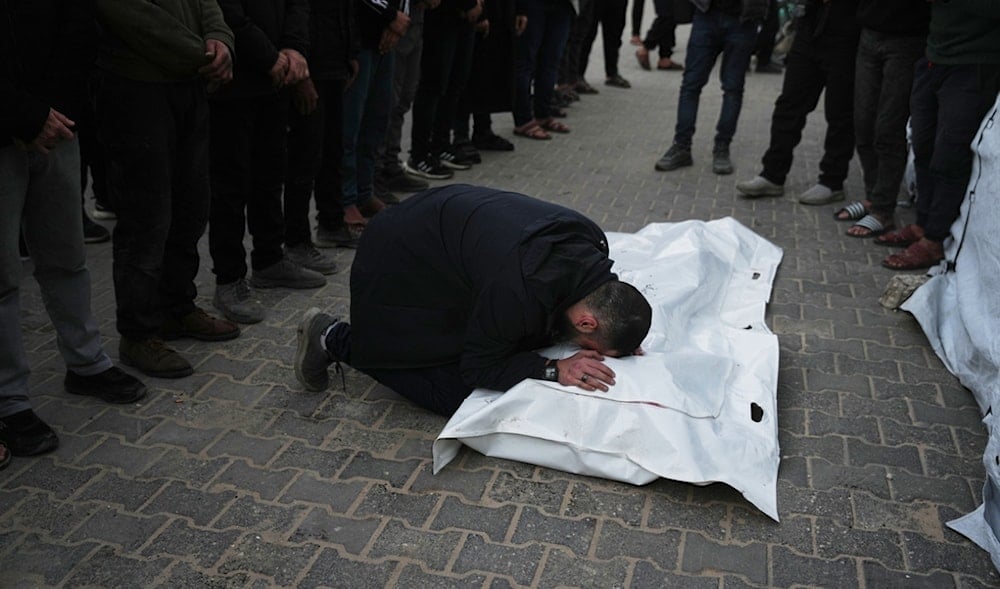
The announcement comes amid a new wave of Israeli bombings on Gaza, which left at least 16 Palestinians dead in the last 24 hours, according to the Al Mayadeen network, while military operations continue in the territory.
The second phase of the plan includes the installation of a 15-member Palestinian technocratic committee tasked with the day-to-day administration of the Gaza Strip during a period of transition.
The idea is to exclude Hamas and other Palestinian resistance factions from the new political process in the Arab enclave.
According to mediators involved in the negotiations, including Egypt, Qatar and Turkey, the committee should focus on the management of essential services and the administrative reorganization of the territory devastated by the Israeli military offensive.
The plan foresees that this committee will act under the direct supervision of the Peace Council, without elective character and without control over central issues such as security, borders and defense.
The proposal also contemplates the sending of a “militarized international stabilization force”, in theory responsible for guaranteeing security and training selected units of the Palestinian police, although there is no definition of its composition or mandate.
The demilitarization of Hamas is presented by Trump and his special envoy for the Middle East, Steve Witkoff, as a central element of the second phase of the plan.
According to Witkoff, the current stage aims at the “total demilitarization of Gaza”, including the disarmament of factions considered unauthorized. To date, there is no public agreement from Hamas on this requirement.
Despite the announcement of the new phase, no timeline was released for the complete withdrawal of Israeli troops from the Gaza Strip.
The withdrawal is foreseen in the general framework of the plan supported by Washington, but continues without defined dates or mechanisms, maintaining the Israeli military presence in the territory during the so-called transition.
Since the ceasefire came into force in October, Israeli bombing has decreased but has not stopped. Gaza health officials say more than 450 Palestinians have been killed since then, as well as hundreds injured, in attacks recorded even during the agreement.
In reaction to Trump’s announcement, Hamas leader Basem Naim declared that “the ball is now in the court of the mediators, the North American guarantor and the international community”, demanding concrete conditions for any administrative arrangement in Gaza.
The Palestinian group has reiterated that any political transition depends on the end of the Israeli military presence and real guarantees for the population of the territory.
The second phase negotiations have been conducted mainly in Cairo and involve, in addition to the governance of Gaza, discussions on the additional withdrawal of Israeli forces, the reopening of the Rafah crossing on the border with Egypt, and the entry of humanitarian aid stockpiled on the Egyptian side.
With persistent impasses over disarmament, military withdrawal and governance, diplomats involved in the process assess that the second phase of the plan is progressing under strong external guidance and without a clear definition of the terms of Palestinian sovereignty, in a context marked by continued violence and occupation in the territory.
Source: vermelho.org.br