Published 01/15/2026 07:39 | Edited 01/15/2026 08:32
The meeting held this Wednesday (14) at the White House between representatives from the United States, Denmark and Greenland ended without an agreement, after the Donald Trump government maintained its demand for control over the island and Danish and Greenlandic authorities reaffirmed that the territory is not for sale.
The parties agreed to maintain contacts in the coming weeks through a high-level working group created after the meeting, although Danish and Greenlandic officials indicated that the US government’s position remained unchanged.
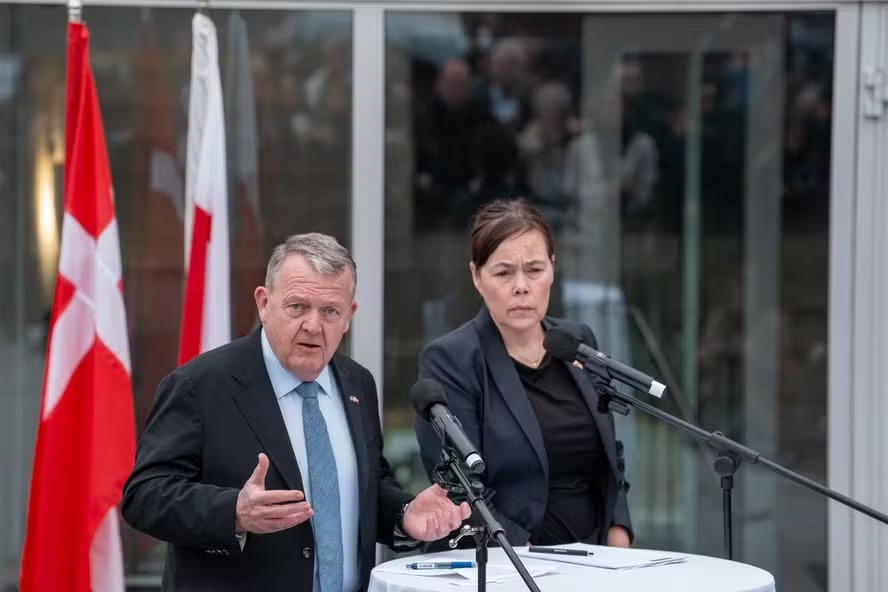
The meeting was led by the Vice President of the United States, JD Vance, and was attended by Secretary of State Marco Rubio, the Minister of Foreign Affairs of Denmark, Lars Løkke Rasmussen, and the Minister of Foreign Affairs of Greenland, Vivian Motzfeldt.
After the meeting, Danish Foreign Minister Lars Løkke Rasmussen stated that the meeting was “frank, but also constructive”, but acknowledged that there had been no change in Washington’s position.
“We still have a fundamental disagreement. We have not been able to change the American position,” said the chancellor.
Rasmussen added that the Danish government considers any proposal that disrespects the country’s sovereignty or Greenland’s right to self-determination to be unacceptable.
“The president has this desire to conquer Greenland. For us, ideas that do not respect the territorial integrity of the Kingdom of Denmark or the right of self-determination of the Greenlandic people are totally unacceptable,” he said.
Greenland’s Foreign Minister, Vivian Motzfeldt, reaffirmed the limits presented during the meeting at the White House and rejected any hypothesis of transferring control of the territory.
“Strengthening cooperation does not mean that we want to be owned by the United States. We have clearly shown where our limits are,” he declared.
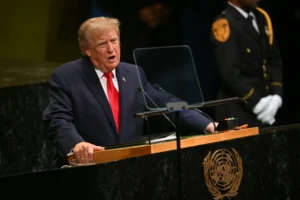
In recent months, the President of the United States, Donald Trump, has publicly reiterated his intention to take control of Greenland, an autonomous territory of the Kingdom of Denmark, stating that the island is strategic for North American security and not ruling out the use of force to guarantee this objective.
In statements and posts on social media, Trump stated that the United States “needs Greenland for national security purposes” and that any scenario that does not place the territory under Washington’s control is “unacceptable.”
Trump has justified pressure on the island with the argument that its location in the Arctic is central to anti-missile defense systems and the containment of Russia and China in the region.
After the Prime Minister of Greenland, Jens-Frederik Nielsen, declared this Tuesday (13) that the territory does not wish to be incorporated into the United States and that it intends to remain part of the Kingdom of Denmark, Trump reacted with new public statements.
“I don’t know who he is. I don’t know anything about him, but this is going to be a big problem for him,” the president said.
On the eve of the meeting at the White House, the president once again stated that, without US control of Greenland, NATO would be vulnerable, maintaining that the alliance would become “much more formidable and effective” if the territory was “in the hands of the United States”.
Washington’s rhetorical escalation has alarmed European allies, who believe that an attempt to impose control over Greenland would put the very cohesion of the North Atlantic Treaty Organization (NATO) at risk.
Authorities and analysts point out that a measure of this type could implode the military alliance, of which the United States and Denmark are part, by breaking with basic principles of sovereignty and cooperation between allies.
In this context, the role of Vice President JD Vance in leading the talks has been followed with apprehension by European governments.
Vance has stood out in recent years for critical and hostile statements toward Europe, including attacks on governments that refuse to cooperate with the European far right and complaints about the United States’ role in financing the old continent’s security.
Diplomats interviewed by the international press stated that Vance’s presence at the helm of the meeting signals a tougher stance from Washington.
In previous statements, Vance said tongue-in-cheek that he “loves Europe” but also accused European leaders of being “asleep at the wheel” on issues such as defense and migration.
For European authorities, this combination of ideological discourse and decision-making power reinforces the fear that the pressure on Greenland is not episodic, but part of a broader strategy by the Trump administration that calls into question the future of transatlantic relations.
Source: vermelho.org.br