Published 06/01/2026 07:30 | Edited 06/01/2026 18:37
Demonstrations in defense of Venezuela and the sovereignty of Latin America took to the streets of several Brazilian capitals this Monday (5), consolidating a popular and progressive response to the United States offensive against the South American country. The acts denounced the military attack, the kidnapping of President Nicolás Maduro and First Lady Cilia Flores, and reaffirmed the right of Latin American peoples to self-determination, without external interference.
The mobilizations brought together students, workers, popular movements, feminist organizations, trade unions and political parties, in a journey marked by a strong internationalist character. In slogans, banners and speeches, the protesters denounced North American imperialism, rejected the logic of war and defended Latin America as a zone of peace, built on the sovereignty of the people and regional integration.
Belo Horizonte: “We will continue to be mobilized”
In Belo Horizonte, hundreds of people occupied Praça Sete, in the center of the capital of Minas Gerais, in an act called by the Brasil Popular and Povo Sem Medo fronts. The mobilization denounced Maduro’s kidnapping as a flagrant violation of international law and warned of the risks of naturalizing military interventions in the region.
Also read: Brazil condemns US intervention in Venezuela and warns of erosion of the UN
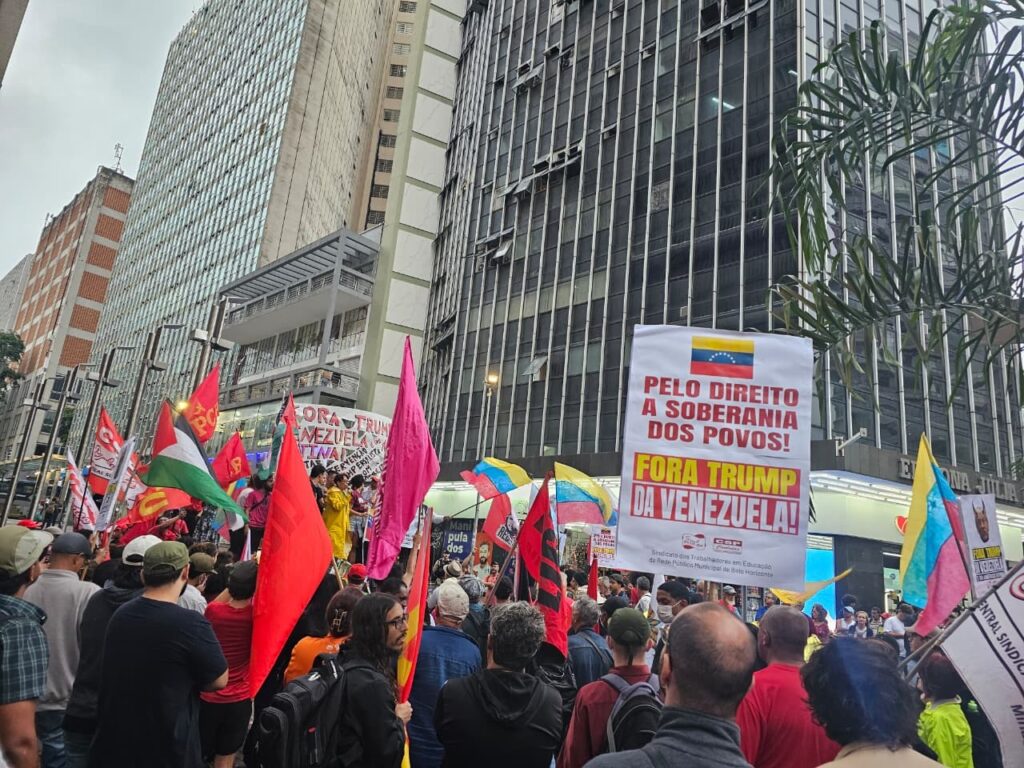
Protesters highlighted that the offensive against Venezuela is not an isolated episode, but a threat that could extend to any Latin American country. The protest was marked by speeches that highlighted the geopolitical and economic interests behind the US action, especially the dispute over strategic natural resources. In the end, the participants reinforced that the fight does not end there. “We will continue to be mobilized”, stated leaders, indicating their willingness to maintain popular pressure in the coming days.
São Paulo: repudiation of imperialism and denunciation of looting
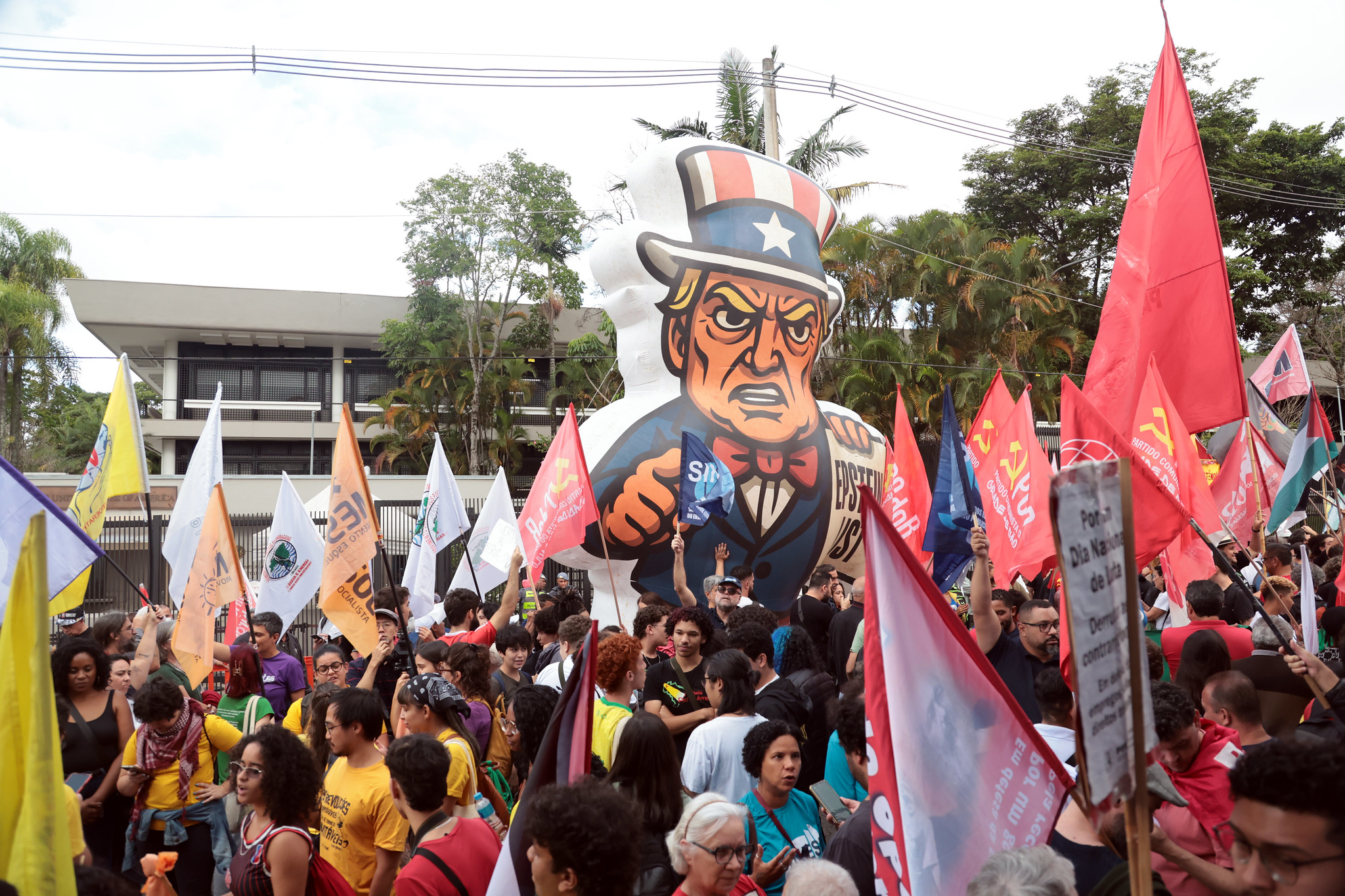
In the capital of São Paulo, the event took place in front of the United States Consulate, in the south of the city, and brought together popular movements, student youth and trade union organizations. The demonstration was marked by slogans against imperialism, the symbolic burning of US flags and accusations of the kidnapping of the Venezuelan president as a true act of war.
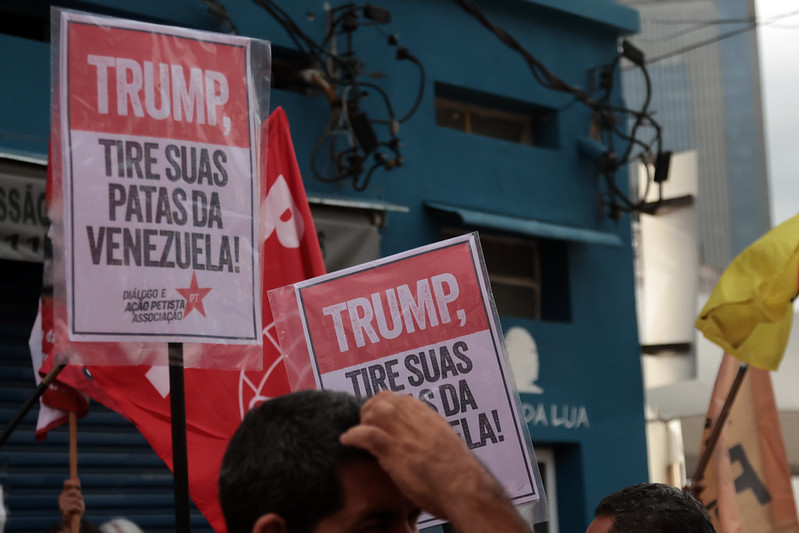
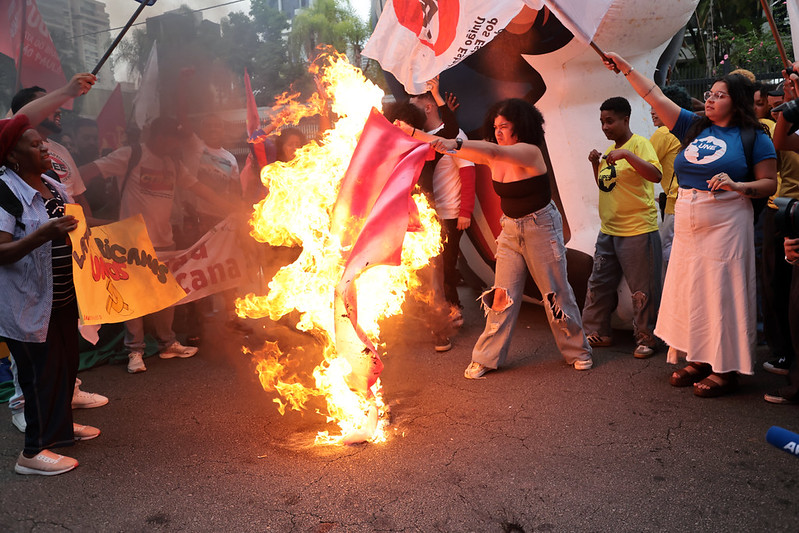
During the protest, leaders of social movements highlighted that the aggression against Venezuela expresses a historic attempt to subject Latin America to Washington’s interests, resuming the logic of the Monroe Doctrine. Representatives of the Landless Rural Workers Movement (MST) stated that the North American action is directly linked to the control of Venezuelan oil and announced concrete solidarity initiatives with the people of the neighboring country.
During the event, the president of the National Union of Students (UNE), Bianca Borges, stated that the mobilization expresses Brazilian youth’s rejection of the United States’ intervention in Venezuela and denounced the kidnapping of President Nicolás Maduro as an attack on regional sovereignty.
“The kidnapping of a South American head of state is an unprecedented attack not only on the sovereignty of Venezuela, but of all of Latin America,” he declared.
For the student leader, the American offensive represents “the reissue of the Monroe Doctrine”, whose legacy, according to her, is “the destruction of democracy and the threat to any country that refuses to kneel before the interests of the United States”. Bianca also warned that “today it is Venezuela, tomorrow it could be Brazil or any other country”, arguing that Latin America “will not be a war zone”.
Rio de Janeiro: Cinelândia brings together youth against intervention
In Rio de Janeiro, protesters gathered at Cinelândia, in the city center, in an act that was part of the national day of mobilizations in solidarity with Venezuela. The protest brought together students and activists from popular movements, reaffirming the youthful nature of the mobilization against the United States offensive in the region.
The president of the Brazilian Union of Secondary Students (UBES), Hugo Silva, also participated in the event and stated that youth will not accept any attempt to submit Latin America to the interests of the United States.
“Latin America does not surrender. Today, it stands up to defend its sovereignty”, he declared. Hugo also stated that students from across the country occupied the streets in solidarity with the Venezuelan people and in defense of President Nicolás Maduro’s freedom. In his speech, the leader directly attacked the president of the United States, stating that “Donald Trump has to get his paws and bloody hands out of Latin America”.
Brasília: march to the US Embassy
In the Federal District, around 250 people participated in a unified event that began at the National Museum of the Republic and continued on to the United States Embassy. With flags, banners and chants such as “Trump out of Latin America” and “Latin America will all be socialist”, the protesters denounced North American foreign policy as a threat to regional sovereignty.
Also read: Oil is Trump’s immediate objective in Venezuela
The protest brought together students, social movements, feminist organizations and left-wing activists, who emphasized the internationalist nature of the mobilization. For the participants, what is at stake goes beyond the specific situation in Venezuela: it is about stopping a dangerous precedent that authorizes the US to intervene militarily in any country that does not submit to its interests. Speeches during the event highlighted that defending Venezuela is also defending Brazil and the future of Latin America.
National mobilization and Latin American unity
In addition to Belo Horizonte, São Paulo and Brasília, acts were recorded in Rio de Janeiro, Salvador, Porto Alegre, Florianópolis, São Luís, Aracaju and Fortaleza, demonstrating the capillarity of the popular response across the country. In several cities, the presence of student youth was notable, reinforcing the leading role of new generations in defending sovereignty and against war.
Also read: Pope Leo XIV defends Venezuela’s sovereignty
This Monday’s demonstrations reflect the broad international repercussion of the case and the position of governments and entities that condemned the United States’ military action. For organizers, the response on the streets is essential to strengthen diplomatic pressure and affirm that Latin America does not accept being treated as the backyard of any power.
At the end of the events, entities reinforced that the mobilization journey continues. “Defending Venezuela means defending the right of people to decide their own paths, without kidnappings, bombings or external tutelage”, summarized the protesters, reaffirming their active solidarity with the Venezuelan people and their commitment to a sovereign, integrated and peaceful Latin America.
__
with agency information
Source: vermelho.org.br