Published 27/12/2025 13:16 | Edited 12/27/2025 1:19 pm
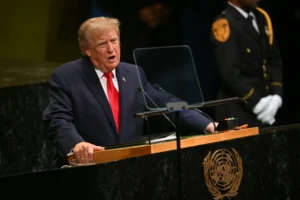
The communist parties (PCs) in power took relevant decisions in 2025 to bring their respective governments up to par with the brand new world order and move forward in the construction of socialism. In a year in which imperialism and the international extreme right advanced – especially since Trump’s return to the White House in January – these parties reaffirmed socialism as a political, economic and ideological alternative.
Of thousands of organizations that define themselves as communist, Marxist-Leninist, Maoist, workers or similar in 110 countries, there are at least 315 that are legalized and active parties. Five of them govern socialist republics: the Chinese Communist Party (CCP), the Workers’ Party of Korea (PTC), the Communist Party of Cuba (PCC), the Communist Party of Vietnam (PCV) and the Lao People’s Revolutionary Party (PPRL).
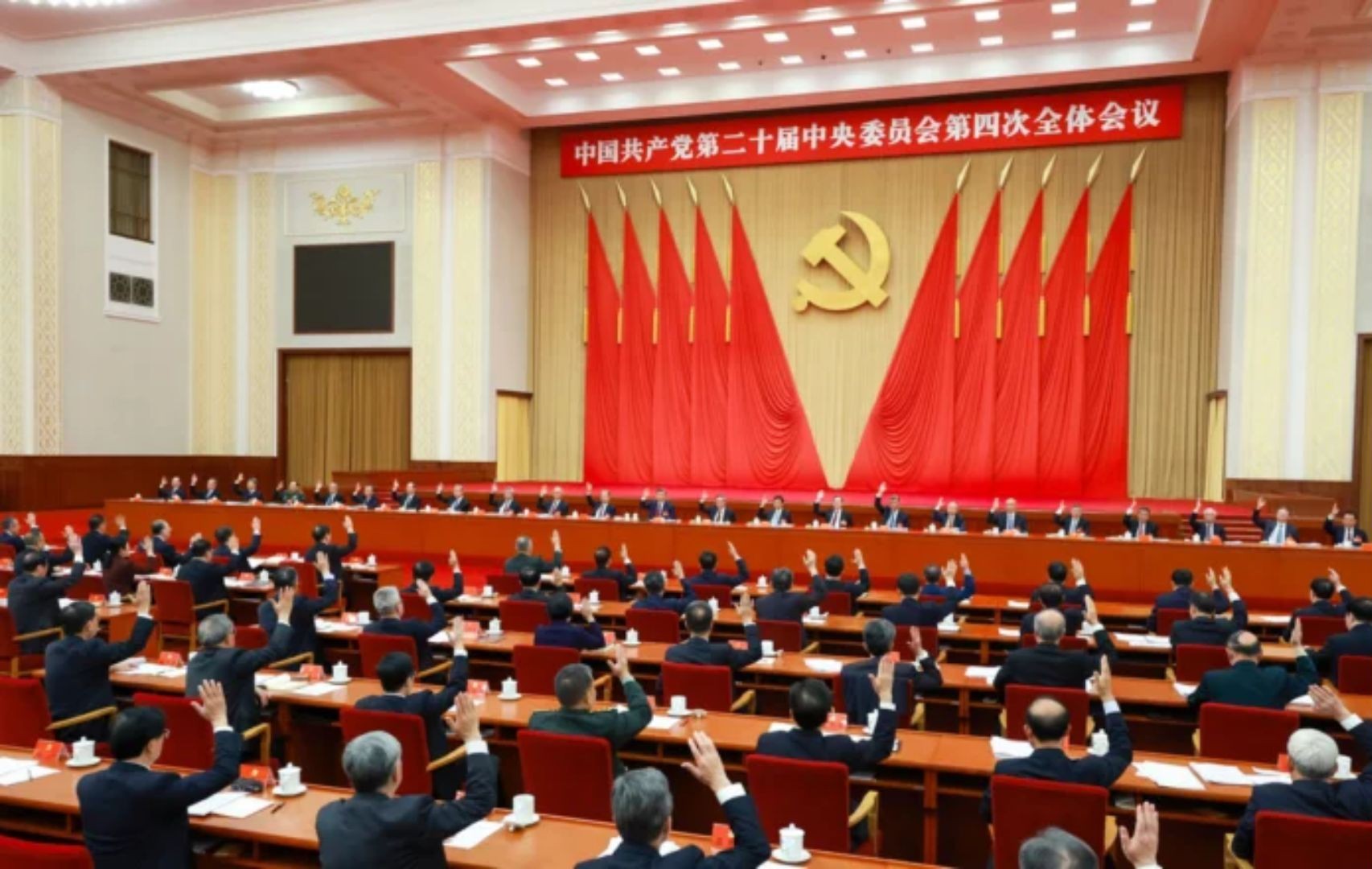
The North Koreans have, proportionally, the most representative party, with an estimated 6.5 million members in a country of 26 million inhabitants – equivalent to 25% of the population. In absolute numbers, the largest PC is China, which, in July, made a historic announcement: for the first time, the number of members of the acronym surpassed the 100 million mark.
A separate case is that of Nepal, a small nation in South Asia with an area smaller than Acre. With the fall of the monarchy in 2008, the country became an unusual parliamentary republic under the administration of communist parties. Since then, two PCs – the Center-Maoist and the Unified Marxist-Leninist (CPN) – have taken turns in power.
China
With 1.4 billion inhabitants, China is the largest of the countries governed by communists. The CCP has 100.3 million members, spread across 5.2 million grassroots organizations. Detail: the affiliation process is so rigorous that, this year, there are no less than 21.4 million candidates in line, waiting for acceptance by communist leaders.
To join the Communist Party, a Chinese person spends up to three years completing stages that begin with the application letter and taking training courses. Once “approved” in these stages, applicants remain as probationary members for one year – until a committee decides that they can finally become full members.
In addition to attracting and qualifying activists, the Chinese Communist Party dedicated itself in 2025 to preparing its 15th Five-Year Plan (2026-2030). To advance in the construction of communism, the Chinese highlight as a priority – in the next five years – one of the greatest achievements since the 1949 Revolution: the achievement of economic and technological self-sufficiency.
According to Elias Jabbour, one of the greatest experts on Chinese socialism, the CCP has already left a valuable legacy: demonstrating that “planning – with its institutional framework, the five-year plans – was the greatest economic fact of the 20th century and continues to be so in the 21st century”. Today, as think tanks supported by the CCP, China’s economy is 223 times larger since the adoption of the 1st Five-Year Plan (1953-1957), under the Mao Zedong government.
Vietnam
The third largest communist party in the world, the PCV has 5.3 million members. But its crowning achievement in 2025 was to have kept Vietnam as the fastest growing economy in Southeast Asia. The government predicts an increase of 8% in GDP (Gross Domestic Product) between January and December, while the World Bank projects 6.8%. In the first half of the year alone, growth was 7.52% – the highest for this period in 15 years.
Industry, one of the engines of this impulse, already accounts for 36.9% of the Vietnamese economy. Another dynamism factor is public investment in strategic infrastructure projects, such as Long Thanh International Airport and the North-South high-speed railway. Large and medium-sized Vietnamese cities have become a huge construction site.
In October, Vietnam celebrated the 80th anniversary of the August Revolution, a milestone of its independence. The military parade that celebrated the date was one of the largest in the history of Ba Dình Square, in Hanoi. According to Tô Lâm, secretary general of the PCV, independence opened the way for “national liberation, reunification and economic reforms”.
Now, said Tô Lâm, it is necessary to transform Vietnam into a “powerful, prosperous and happy” country. In November, the PCV approved a new state policy, which aims precisely to make Vietnam a “developed, high-income socialist nation” by 2045, based on “accelerated growth” and “social stability”.
Cuba
In 2025, Cubans began celebrating the centenary of revolutionary leader Fidel Castro (1926-2016). The program – which runs until December next year – will have hundreds of activities, coordinated by the Communist Party, the Fidel Castro Ruz Center and the Union of Young Communists (UJC). In government calculations, the agendas could increase the number of tourists by 15.8%, attracting a total of 2.2 million visitors to the country.
Regarding internal challenges, Cuba faces a “war economy scenario”, according to the words of the Minister of Economy and Planning, Joaquín Alonso Vázquez. The crisis was worsened by the devastating passage of Hurricane Melissa and the tightening of the US blockade under Trump. “The harmful effects of the intensified economic, commercial and financial blockade are more evident than ever in all spheres of the Cuban economy and society,” says Vázquez.
In December, the minister presented the Economic Plan for 2026, which “requires the mobilization of all the country’s productive reserves”. According to the Granma“the main priority is the recovery of tourism and traditional export sectors, increasing income from professional services and attracting more foreign investment, remittances and financing”.
Also in December, the Communist Party of Cuba postponed its 9th National Congress (initially scheduled for April) and reaffirmed the centrality of the struggle to overcome economic obstacles. Former president Raúl Castro, author of the proposal to postpone Congress, justified: “May we dedicate the year 2026 to recovering in whatever way possible”.
Nepal
Among the communists in power, the most tested in 2025 were those in Nepal, struggling with a hybrid war after the blocking of major platforms, such as WhatsApp, Facebook, Instagram e YouTube. In September, when the big techs definitively refused to comply with Nepali legislation, the government complied with a Supreme Court ruling and suspended social media. It was the trigger for large and unexpected mobilizations. Thousands of young people took to the streets in violent acts, which left more than 70 dead and 600 injured.
The country entered a “political collapse”, as reported to the Red Portal Smritee Lama, CPN leader. The headquarters of the Executive, Legislative and Judicial branches were set on fire, and Prime Minister Khadga Prasad (KP) Sharma Oli resigned. According to Smritee, “in addition to domestic frustrations, there are geopolitical interests and a manipulation of youth participation that have further fueled the unrest.”
The blockade of social media was revoked and the government called new elections for March 2026. The hybrid war has already impacted the country’s left, which has unified: nine acronyms – including the two alternating PCs in the government – have merged into a single party, which is now called the Nepalese Communist Party (PCN). The first congress of the new party was held in November and the approved program openly defends socialism with “Nepali characteristics”.
By the end of 2025, it is inaccurate to say that there is a globally organized communist movement. But the daily actions of communist parties in power, such as the CCP, the PCC, the PCV and the PCN, leave lessons and serve as a reference for the other more than 300 parties around the world.
Source: vermelho.org.br