Published 14/12/2025 11:05 | Edited 12/14/2025 11:55
Chile decides this Sunday (14) who will govern the country from 2026 onwards in a second presidential round marked by the attempt by communist candidate Jeannette Jara to contain the rise of the extreme right, represented by José Antonio Kast, who comes to the vote as favorite in the polls after consolidating the support of the traditional right and ultra-conservative sectors.
Jeannette Jara is running for President for the Unidad por Chile coalition, which brings together the Communist Party, the Socialist Party and other center-left parties aligned with Gabriel Boric’s government.
Former Minister of Labor, Jara defends the continuity of social policies, such as the expansion of labor rights, the strengthening of public spending in areas such as education, social security and security, in addition to a migration policy based on state control and regularization.
His opponent, José Antonio Kast, leads the Republican Party and concentrates support from the traditional right and the extreme right.
Kast proposes an accelerated fiscal adjustment, with cuts of up to US$6 billion in public spending in 18 months, tax reductions for higher-income sectors, tougher penalties, expanding the role of the Armed Forces in internal security and mass deportation of undocumented immigrants — an agenda that critics point out as capable of reducing social protection in a country still marked by growing structural inequalities.
In the first round, held on November 16, Jara came first with 26.8% of the votes, followed by Kast, who obtained 23.9%, a result that took both to the second round.
Despite the initial lead of the government candidate, the group of right-wing and extreme-right candidates totaled around 76% of the valid votes, creating a favorable base for Kast in the decisive stage.
Participation was 85.3%, and around half of the electorate did not vote for either of the two finalists, making the dispute for votes transferred from defeated candidates decisive, especially in a second round marked by mandatory voting, resumed in the country after decades.
In the final stretch of the campaign, Jara has sought to directly confront his opponent’s program and reject the ultra-right’s discourse on immigration and security. In television debates, the candidate questioned the viability of the mass deportation proposals defended by Kast.
“Sending 330,000 people out of the country means nine years with one plane a day transporting a hundred people. Stop lying to the population to extract a few votes here and there”, he stated, criticizing the use of the migration issue as an electoral instrument.
When refuting accusations that he would merely represent the continuity of the current government, Jara has also insisted that his candidacy presents a project distinct from the fiscal adjustment proposed by the extreme right.
“I’m not going to reduce taxes on the rich as Kast proposes. I’m not going to reduce social spending as Kast proposes, because I want more carabinieros on the streets, more teachers in the classrooms and more lighting on the streets”, he declared, stating that accelerated budget cuts would put essential public policies at risk.
Kast built his campaign on a discourse of permanent collapse, summarized in the slogan that “Chile is falling apart”. For experts, the emergency rhetoric adopted by Kast has been used to justify exception proposals and the expansion of Executive powers.
For the professor of Political Communication at Diego Portales University, Cristian Leporati, the narrative ignores positive economic indicators and operates from the amplification of fear. In an interview with Page/12he stated that the opposition’s discourse artificially constructs a feeling of economic collapse.
“If you analyze, for example, Chile’s export numbers, this year will be historic. There are a series of signs that the economy is working, but the opposition’s rhetoric for a long time is that everything is wrong,” he said.
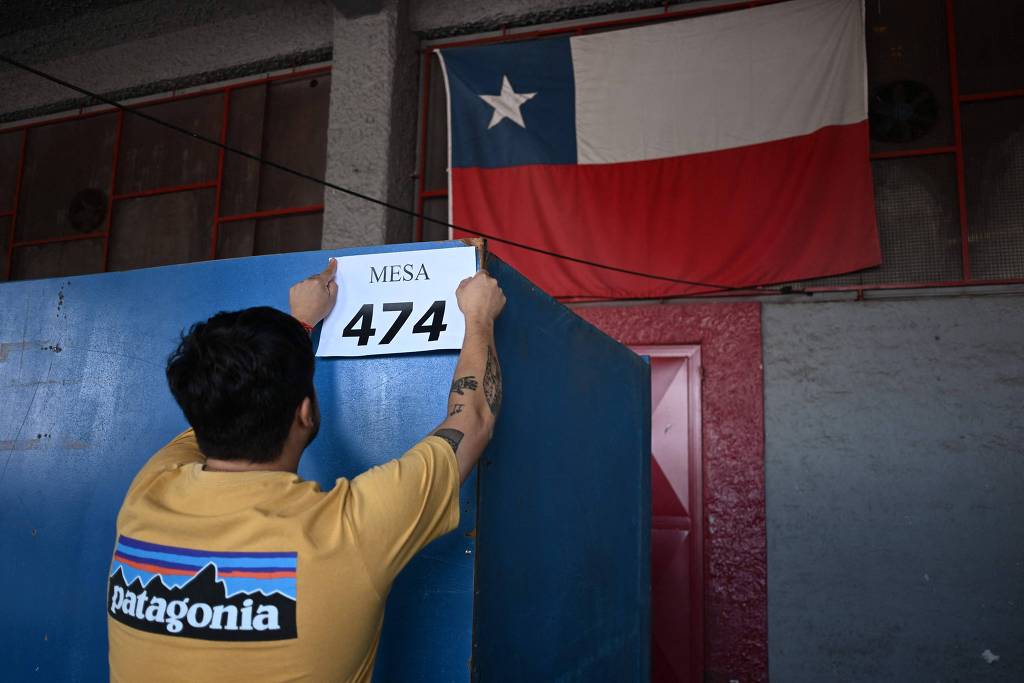
The polls opened at 8am (local time) and remain open until 6pm, as long as there are no voters in line. According to the Chilean Electoral Service (Servel), more than 15.7 million citizens are eligible to vote in the country and abroad.
Voting is mandatory in Chilean territory — resumed after decades — and the electoral authority estimates that the preliminary results of the second round will begin to be released at 8 pm.
Source: vermelho.org.br