Published 11/20/2025 1:37 pm
This summer, Marina Roldan, a lawyer from Granada, received a phone call that her family had been waiting for for generations: the body of her grandfather, Fermín Roldán García, killed by Francoist execution squads in 1936, had finally been located in a ravine in Víznar. The socialist inspector and trade unionist was among the thousands of victims of the brutal repression that began during the Spanish Civil War and consolidated over the 36 years of Francisco Franco’s dictatorship.
When remembering the moment, Marina gets emotional: “I thought about my father and my uncles, who would have loved to receive this news”. His grandfather was executed when his father was just ten months old.
The delivery of the remains restores dignity to the families and slowly advances a traumatic legacy: Spain still has around 6,000 unidentified mass graves, spread across woods, cemeteries and rural areas.
Five decades after Francoism, nostalgia grows among young people
This Thursday, Spain marks 50 years since the end of the dictatorship, but the country is experiencing a contradiction. Recent surveys show that 20% of young people between 18 and 24 consider the regime “good” or “very good”, an alarming figure for historians and educators.
Teachers report an increase in speeches influenced by social networks, especially on TikTok, where influencers and far-right groups promote idealized versions of the dictatorship.
“Students say it was a better period, that there was no feminism or immigration. It’s a totally distorted view,” says José García Vico, an economics professor in Andalusia. He reports episodes in which parents defended children who shouted “Viva Franco!” in the classroom, claiming “freedom of expression”.
The advance of the far right and the dispute over historical memory
The rise of the far-right party Vox, which currently has almost 20% of the vote, also has repercussions on this nostalgia. The party rejects the politics of historical memory and openly criticizes exhumations — including the official removal of Franco’s remains from the Valley of the Fallen in 2019.
Analysts say that Vox reproduces messages that romanticize the post-Civil War period as an era of “progress” and “national unity”, a strategy that resonates with young people frustrated with the economic crisis, unemployment and the cost of living.
There is also a generational component: sectors of the Popular Party, a traditional conservative party, never fully condemned the regime.
“Franco was not overthrown. He simply died,” says political scientist Oriol Bartomeus. “This left room for a sociological Francoism to remain alive.”
Exhumations advance, but archaeologists fear setbacks
Excavations, like the one that located Marina’s grandfather, are progressing “at an unprecedented pace”, say archaeologists — thanks to historical memory legislation and state support. But there is fear that a future conservative government will cut funds, as happened under Mariano Rajoy, when the budget was reduced to zero.
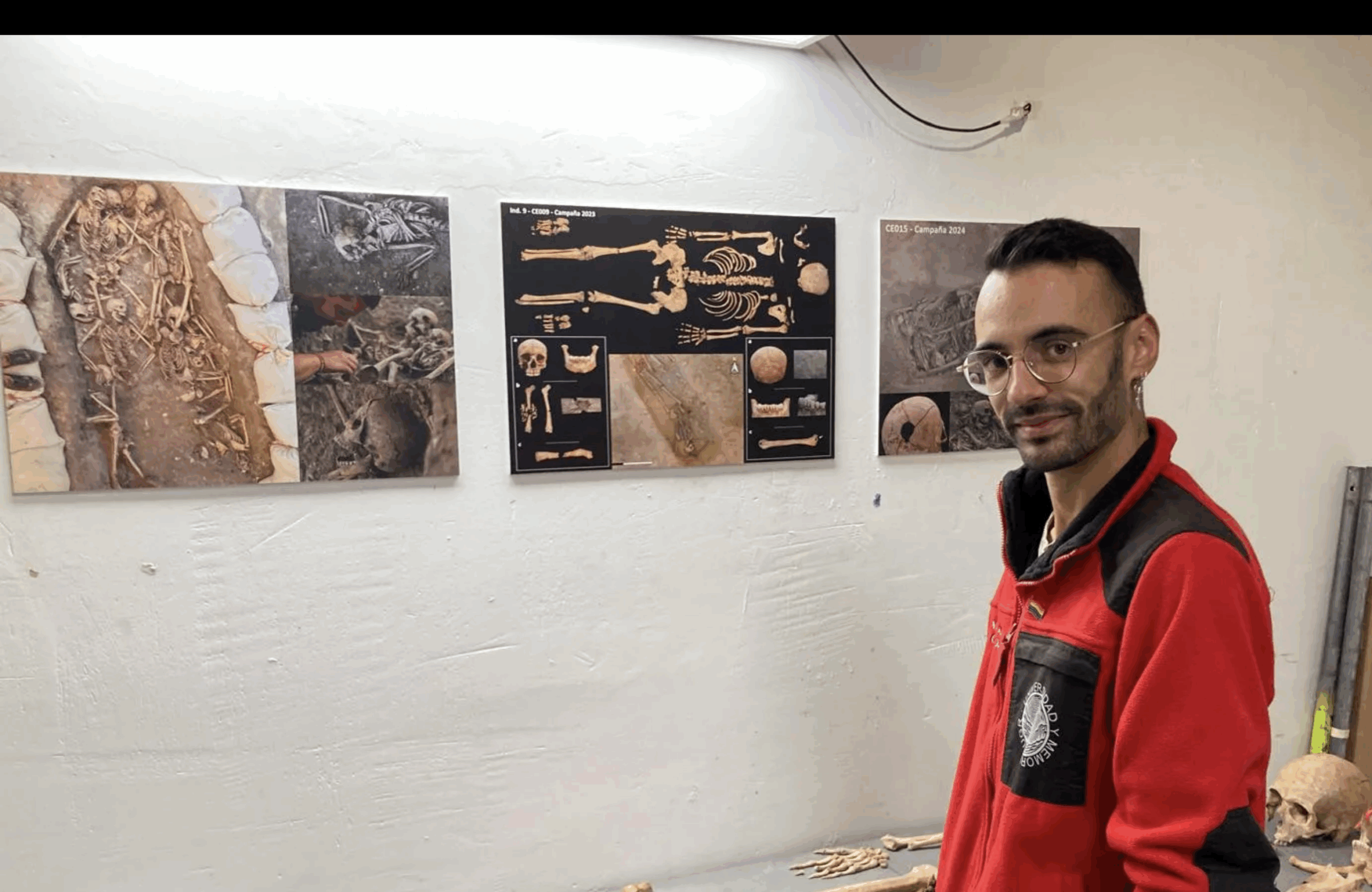
Francisco Carrión, professor at the University of Granada, supervises the work in Víznar. He and his team have already exhumed 166 bodies, including that of a child between 11 and 14 years old. “It’s emotionally devastating. We’re dealing with young people, many our age. And they were ordinary civilians: teachers, seamstresses, trade unionists.”
With each delivery of the remains to the families, he says, there is commotion. “It’s almost magical. It’s closure after almost 90 years.”
Memory, trauma and the dispute over a past that has not yet passed
The legacy of Francoism remains alive in current debates — from social media to classrooms, from courts to mass graves.
For Marina Roldan, finally finding her grandfather does not mean erasing the pain, but pacifying the story. “I don’t feel like a wound has been closed, but a calm. I think my father would be happy. He’s also resting now.”
Five decades after Franco’s death, Spain lives between two forces: the search for truth and historical justice, and the threat that part of society, uninformed or disenchanted, will turn into nostalgia what was, for thousands, a regime of violence and silence.
The dispute, experts say, is not just about the past — it is about the future of Spanish democracy.
With information from Aljazira
Source: vermelho.org.br