Published 11/16/2025 21:32 | Edited 11/16/2025 21:38
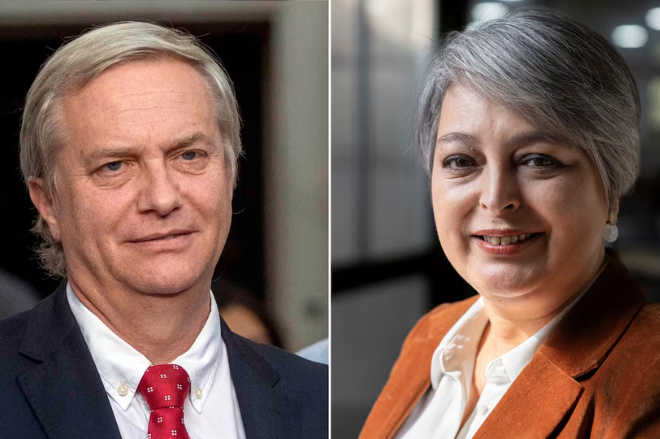
Chile confirmed this Sunday (16) that Jeannette Jara (Communist Party), supported by President Gabriel Boric, and José Antonio Kast (Republican Party), representative of the extreme right, will contest the second presidential round on December 14. The definition came in the preliminary phase of the count, when the Electoral Service (Servel) indicated the leadership of Jara with 26.67% and Kast with 24.19% after 71.16% of the ballots counted until 8:45 pm — a result that reflected both the polls and the centrality of the debate on public security.
The election took place amid an increase in crime and a feeling of insecurity that, according to experts, has driven conservative proposals, especially linked to the fight against organized crime and irregular immigration. Although Jara led the first round, surveys indicate that she reaches the second round at a disadvantage, since several right-wing currents together surpass 50% of the electorate.
Immediate support and growing polarization
Still during election night, President Gabriel Boric used social media to recognize the result and wish the country serenity. “I trust that dialogue, respect and love for Chile will prevail over any differences,” he stated.
Also read: In the final stretch of the campaign, the left tries to consolidate leadership in Chile
The right quickly reorganized. Defeated in the first round, Johannes Kaiser and Evelyn Matthei confirmed immediate support for Kast. “We recognize José Antonio’s victory. We keep our word”, said Kaiser, praising his party’s performance. Matthei also congratulated Kast and declared that “what should concern us most is that Chile can move forward”.
Third place surprised analysts: Franco Parisi, from the Popular Party, surpassed Kaiser and Matthei, reaching around 18.6% of the votes. Known for his radical speech against irregular immigration, Parisi emerges as a decisive figure for the conservative camp in the future Congress.
Security dominates the electoral debate
The campaign was marked by the predominance of the security issue. Kast advocated immediate deportations, strengthening police forces and a “border shield” against irregular immigration. “Unity is necessary to face the problems that afflict us today, which are problems in the area of security. Most people will say they are afraid,” he said after voting for Paine.
Even among young voters, crime plays a central role in voting. “The issue of crime needs to be addressed. Everything is horrible. (…) Change is needed,” he told AFP Joaquín Castillo, 23-year-old student, after voting in Santiago.
Also read: Jeannette Jara, from the Communist Party, leads the race for president of Chile
Official data reinforces the concern: homicides rose from 2.5 to 6 per 100,000 inhabitants in a decade, an increase of 140%. The Public Ministry recorded 868 kidnappings in 2023 — 76% more than in 2021.
Jara tries to expand support and respond to the climate of tension
Jeannette Jara, with a moderate profile within the Communist Party, reinforced during the campaign that she will confront crime without abandoning social policies. She promises impactful measures, such as the end of banking secrecy to attack the finances of organized crime.
In a message published on social media, Jara adopted a conciliatory tone and thanked the support received: “Thank you very much, Chile. Today, we advanced to the second round in first place. We achieved this by walking, listening and talking to thousands of people in all regions. We did this with hope, with effort and with the deep conviction that Chile deserves a better life. […] What is coming is a new opportunity for Chile. An opportunity to prioritize what really matters: people, the effectiveness of our efforts and building a life in peace.”
Analysts estimate that Jara will have to expand his base beyond the center-left, alleviating fears about his communist affiliation. Kast, in turn, tries to soften the ultraconservative discourse on moral issues to capture the moderate electorate that does not want a return to the instability of recent years.
Uncertain second round
With mandatory voting reestablished, more than 15.6 million Chileans were also called to the polls to renew the Chamber and half of the Senate. The performance of the right in the legislative election and the weight of Parisi’s votes could define the final stretch.
Research indicates that Kast reaches the second round more competitive, while Jara is betting on his administrative experience and the wear and tear of the unfulfilled promises of conservative administrations.
Chile returns to the polls on December 14 to decide between two antagonistic projects — in a dispute that synthesizes, once again, the clash between public security and social policies.
__
with agencies
Source: vermelho.org.br