Published 10/22/2025 16:48 | Edited 10/22/2025 17:48
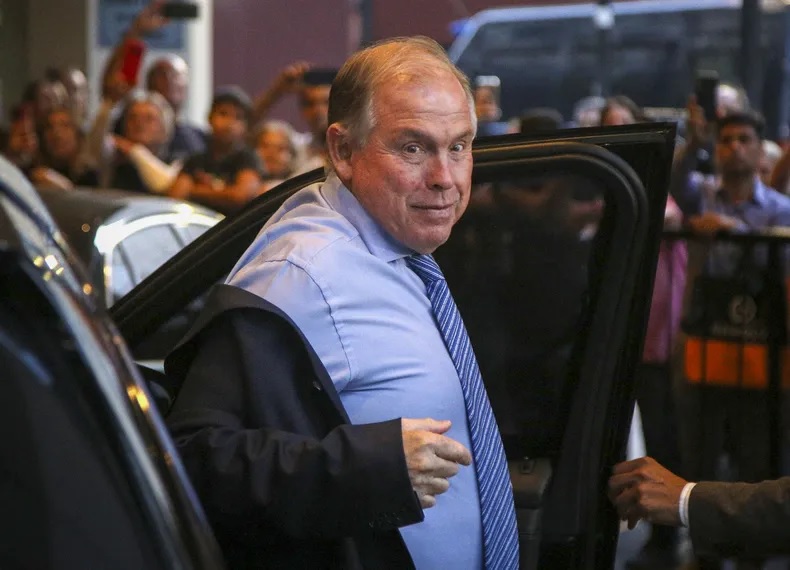
The resignation of Argentina’s Foreign Minister, Gerardo Werthein, marks another chapter in the growing instability in Javier Milei’s government. The chancellor, who had been appointed less than a year ago to lead the ultra-liberal and pro-United States diplomatic turn, decided to leave his post after successive frictions with Santiago Caputo, the president’s trusted advisor and central figure of the hardest core of the Casa Rosada.
Sources close to the government confirmed that Werthein handed in his resignation letter on Thursday night (16), bringing forward his departure, which was only scheduled for after the mid-term elections, next Sunday. The gesture occurred after the chancellor felt politically isolated and disowned by Milei — who, even in the face of virtual attacks from Caputo’s allies, chose to remain silent.
In the shadow of Santiago Caputo
The growing influence of Santiago Caputo — appointed as the president’s communication and political “guru” — has provoked a succession of conflicts within the government. Werthein resisted the idea of having Caputo formally in the cabinet, fearing the emptying of the chancellery and the advancement of foreign policy decisions without the participation of Itamaraty.
According to interlocutors, the minister had already expressed discomfort with what he called “parallel diplomacy”, in reference to Caputo’s actions with American advisors before the meeting between Milei and Donald Trump, in Washington. The episode, which ended in international embarrassment, worsened internal wear and tear.
The fiasco with Trump and the loss of trust
The bilateral meeting between Milei and Trump, which was supposed to consolidate the ideological alliance between Buenos Aires and Washington, ended up turning into a diplomatic incident. The former US president conditioned economic support for Argentina on the victory of the governing party La Libertad Avanza in the legislative elections — a statement interpreted as political interference and which generated strong internal repercussions. Trump said it would not be worth investing in a government that could not continue its policies.
The Wall Street Journal revealed that the financial agreement between Argentina and the United States could include access for North American companies to Argentine uranium. The White House seeks to limit Chinese influence in the region.
The Casa Rosada blamed Werthein for the “misunderstanding”, arguing that he had not adequately explained the nature of the elections to Trump. Privately, however, Argentine diplomats classified the accusation as “absurd” and attributed the error to a lack of coordination between the Ministry and Milei’s closest circle. Trump himself later made it clear that he knew well what the midterm elections were about.
A government in permanent crisis
The resignation of Werthein — the second chancellor to leave the post in less than a year, after the fall of Diana Mondino — reinforces the perception that the Milei government is experiencing a structural crisis of management and political command.
Since the beginning of his term, the president has relied on a restricted group of advisors — nicknamed the “iron triangle” — made up of Santiago Caputo, Karina Milei (sister and general secretary of the Presidency) and spokesperson Manuel Adorni. This nucleus, which concentrates strategic and communication decisions, has increased tensions with allied ministers and governors.
For political analysts, Werthein’s departure represents more than a change of names: it is the symptom of an administration hostage to internal disputes, personalism and improvised impulses.
Weakened diplomacy and political rearrangements
The chancellor’s resignation comes amid speculation about a broad ministerial reform after the elections. Possible replacements include Nahuel Sotelo, secretary of Worship (coordinates the relationship between the government and the Catholic Church and other religions) and ally of Caputo; Úrsula Basset, director of Human Rights; Luis María Kreckler, consul in São Paulo; and Guillermo Francos, current Chief of Staff.
Meanwhile, the San Martín Palace is plunged into a leadership vacuum. Shortly before leaving office, Werthein signed the transfer of 83 diplomats to embassies and consulates, a decision that angered the government and will be reviewed. The chancellor’s final gesture was interpreted as an act of autonomy — or defiance — in the face of the growing power of the presidential environment.
A warning about the future of the Milei government
The diplomatic and political crisis opened by Werthein’s resignation casts doubt on Milei’s ability to sustain internal cohesion amid economic turmoil and social wear and tear. It also calls into question the government’s external diplomacy focused on unconditional support for the USA and Israel, which has been isolated internationally since the accusations of the Palestinian genocide, and can only count on singular support from the USA, Germany, the Czech Republic and Argentina.
In addition to personal disputes, the episode exposes the imbalance between ideology and management at the heart of the Argentine government: a president surrounded by ideological loyalists, but institutionally isolated, as his coalition fragments and his ministers fall one by one.
In a context in which Milei promises “second generation reforms”, the chancellor’s resignation may just be the harbinger of a new cycle of instability — political, diplomatic and, above all, internal.
Source: vermelho.org.br