Published 16/10/2025 09:30 | Edited 10/16/2025 10:13
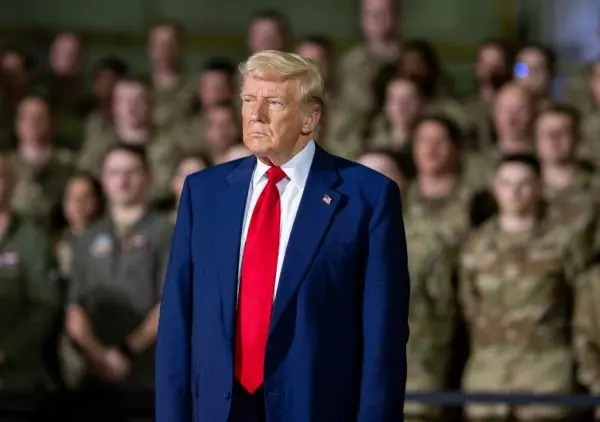
The President of the United States, Donald Trump, confirmed that he authorized the CIA to carry out secret and lethal operations inside Venezuela, with the declared objective of overthrowing the government of Nicolás Maduro.
The information, revealed by The New York Times, was confirmed by the Republican in an interview at the White House on Wednesday night (15). The measure represents the most aggressive step in Washington’s policy in Latin America in decades, returning to the interventionist logic that marked CIA operations during the Cold War.
Trump stated that Venezuela “is feeling the pressure” and did not rule out attacks on Venezuelan territory.
“We are certainly looking at land territory now, because we have the sea very well controlled,” declared the president, suggesting that the US military command is already considering land operations.
The North American newspaper detailed that formal authorization grants the CIA autonomy to carry out lethal actions and coordinate with the armed forces. According to sources cited in the report, the plan includes options for bombing and capturing Maduro, inspired by operations such as the one that resulted in the death of Iranian general Qassim Soleimani in 2020.
The strategy was outlined by Secretary of State Marco Rubio, of Cuban origin, and CIA Director John Ratcliffe, both hard-line allies of Trump.
The plan, according to Folha de S.Paulo, is coordinated with General Dan Caine, head of the US Joint Chiefs of Staff, and seeks to “asphyxiate the regime” with a combination of military and intelligence actions.
Washington even rejected a diplomatic agreement that would have given the US a dominant share in the Venezuelan oil industry, opting for a policy of force and military intimidation, according to the newspaper.
In response, the Venezuelan government classified the measure as a “serious violation of International Law and the Charter of the United Nations”.
In an official statement, the Chancellery of the Bolivarian Republic of Venezuela stated that Trump’s statements “seek to legitimize a regime change operation with the ultimate objective of appropriating Venezuelan oil resources.”
The text denounces the action as “warmongering and extravagant” and asks the international community to react to the military escalation of the United States in the Caribbean, a region declared a “zone of peace” by CELAC in 2014.
During a meeting of the National Sovereignty and Peace Council, broadcast on teleSur, President Nicolás Maduro made a direct appeal to the North American people.
“I say to the people of the United States: no to war. We don’t want a war in the Caribbean and South America,” he said in English — “Not war, please, listen to me.”
The Venezuelan leader also called Trump’s initiative a “coup d’état sponsored by the CIA” and compared the offensive to the policy of destruction carried out in the Middle East.
“No more CIA coups. No more regime change, which reminds us so much of the failed wars in Afghanistan, Iraq and Libya,” he said.
Maduro also ordered military exercises across the country, claiming that mobilization is necessary to “defend mountains, coasts, schools, hospitals and factories” and guarantee peace in the face of the threat of external aggression.
In parallel, Venezuela presented a formal complaint to the Community of Latin American and Caribbean States (CELAC) and announced that it will take the case to the UN Security Council, requesting “urgent measures to prevent a military escalation in the Caribbean”.
Maduro also criticized exiled opponents who call for military attacks on Venezuela. “It is cowardly not to show your face, hide in Miami and ask to bomb a homeland of noble people, who only work and live in peace.”
At the end of his speech, he reinforced: “Let us defend peace, win peace, preserve peace.”
Military escalation in the Caribbean and justification of “war on drugs”
Since September, the US has been expanding its military presence in the region. There are 10,000 soldiers, eight warships and a nuclear submarine positioned in the Caribbean, in an area close to the Venezuelan coast.
The Pentagon claims that the operation aims to combat international drug trafficking, but did not present evidence that the destroyed vessels — with 27 dead — were transporting narcotics.
The White House informed Congress that the United States is “in a situation of armed conflict with Latin American drug traffickers”, trying to legally justify unilateral attacks on foreign territory.
The US Constitution, however, reserves the power to declare war to Congress, which would require support from the Democratic Party.
The Trump administration, in turn, insists on associating Maduro with the Cartel de los Soles and the Tren de Aragua faction, accusations refuted by US intelligence reports.
The offensive was interpreted by Caracas as preparation for open war. The US Department of Justice had already offered US$50 million for Maduro’s capture, classifying him as “one of the biggest drug traffickers in the world”.
Report to CELAC and alert to the UN
At the extraordinary meeting of CELAC foreign ministers, called by the Presidency Pro Tempore of Colombia, Venezuela formalized a complaint against the United States and demanded an immediate regional response.
The official statement informs that the Venezuelan Permanent Mission to the UN will take the case to the Security Council and the Secretary General, asking for “accountability” from the North American government and “urgent measures to prevent a military escalation in the Caribbean”.
The text recalls that the Caribbean was declared a zone of peace by CELAC in 2014 and warns: “The international community must understand that impunity for these acts will have dangerous political consequences that need to be stopped immediately.”
Historical interference and legacy of the CIA in Latin America
The new authorization reignites the debate about the CIA’s historical role in coups and interventions in the region. Since the 20th century, the agency has participated in the overthrow of Jacobo Árbenz in Guatemala (1954), the Bay of Pigs invasion in Cuba (1961), the military coup in Brazil (1964), and the coup against Salvador Allende in Chile (1973).
Venezuelan analysts claim that the current speech from the White House repeats the interventionist rhetoric of the Cold War period, now disguised as combating drug trafficking and communism.
According to political scientist Éder Peña, from the Venezuelan Institute for Scientific Research (IVIC), the rhetorical escalation “keeps the issue at the top of the public agenda, spreading false information about alleged cartels in Venezuela”.
Analyst Ricardo Vaz, from the Venezuela Analysis portal, highlights that “the CIA has never stopped organizing subversive actions against countries considered enemies of the USA”.
Source: vermelho.org.br