Published 09/09/2025 15:12 | Edited 09/09/2025 11:26
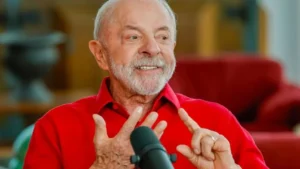
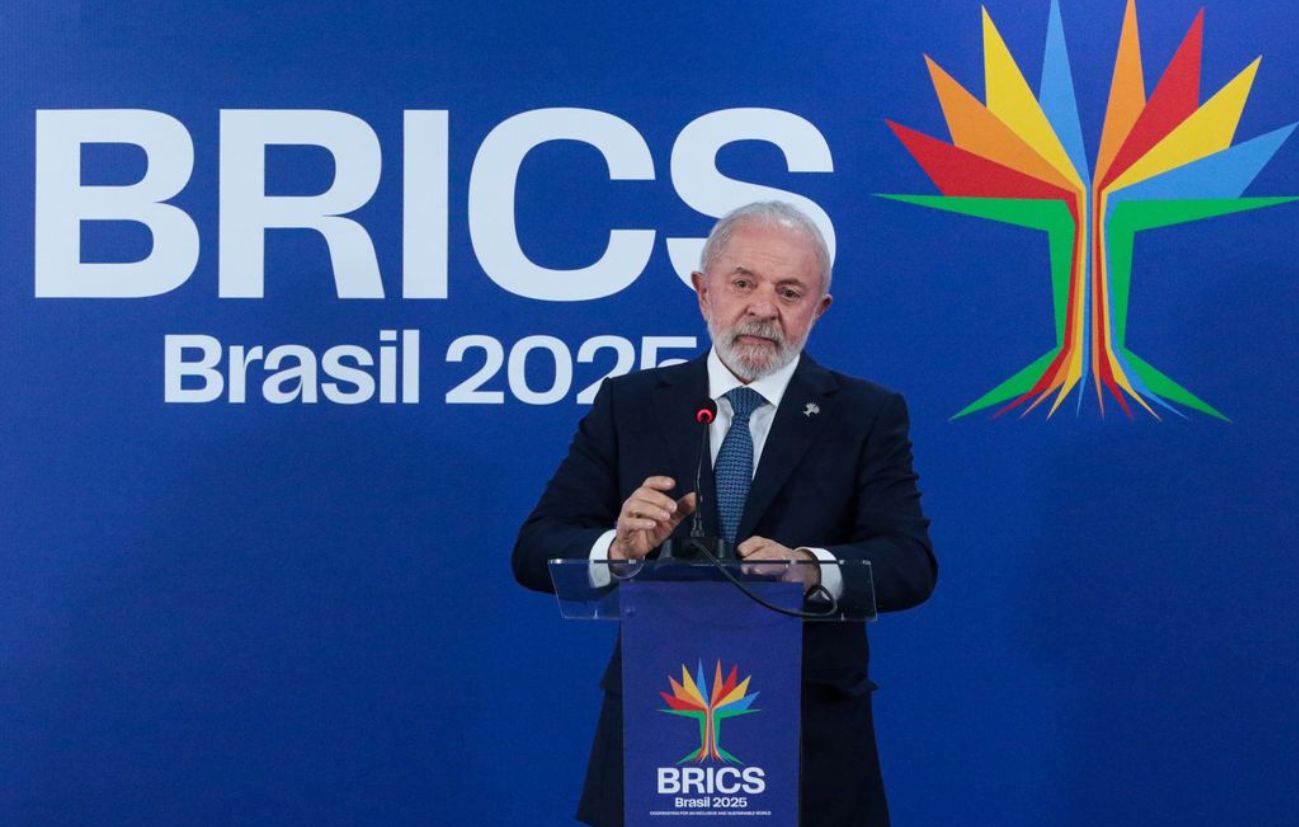
At the head of the BRICS presidency, President Luiz Inacio Lula da Silva promoted, on Monday (8), a video conferencing with leaders from the countries that make up the group. In his speech, he warned of the moment of world “growing” and criticized the fact that “the tariff blackmail is being normalized as an instrument for the conquest of markets and to interfere with domestic issues”. Lula also reinforced the proposal to create a UN climate change council.
The conversation took place two months after the group’s summit meeting, held in Rio de Janeiro, and a few days from the 80th United Nations General Assembly – an event that was one of the points of the discussion.
According to a statement issued by the Planalto Palace, the meeting was attended by leaders from China, Egypt, Indonesia, Iran, Russia, South Africa, as well as the prince heir to the United Arab Emirates, the India Chancellor and the Deputy Minister of Foreign Affairs of Ethiopia.
Also read: “Brazil has a single owner: the Brazilian people,” says Lula in a statement
At the time, considering the world scenario pointed out by the Brazilian President, BRICS “reaffirmed its commitment to the preservation and strengthening of multilateralism, as well as to the reform of international institutions,” says the statement.
The note also points out that leaders talked about how to face “the risks associated with the recruess of unilateral measures, including international trade, and how to expand the mechanisms of solidarity, coordination and trade between the BRICS countries”.
The statement also stated that the group continues “committed to actively contributing to peace, the defense of multilateralism and the construction of collective solutions to global challenges.”
Undue intervention
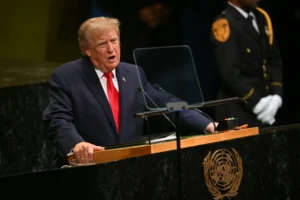
The meeting was not broadcast, but Lula’s speech was released by the Planalto Palace. Although he has not named Donald Trump nominally, Lula focused its presentation especially in criticism of interventions in internal matters and taxes promoted by the president of the United States to various countries, especially Brazil, as well as the importance of multilateralism to face this and other challenges of the current conjuncture.
Lula stated that “unilateral measures have transformed a deadly basic principles of free-trade into a dead letter” and that we now “see the formal burial of these principles.” In addition, he stressed that “our countries have become victims of unjustified and illegal business practices” and that “tariff blackmail is being normalized as an instrument for conquering markets and to interfere with domestic matters.”
Also read: China displays military power and sends a message to the US in historical parade
He also pointed out that the imposition of “extraterritorial measures threatens our institutions,” adding that “secondary sanctions restrict our freedom to strengthen trade with friendly countries. Divide to gain is the strategy of unilateralism.”
At another important point of his speech, Lula emphasized that “when the principle of sovereign equality of states is no longer observed, internal affairs becomes common practice. The peaceful solution of controversy gives way to Belic conduct. Without support in international law, failures experienced in Afghanistan, Iraq, Libya and Syria will again repeat.”
Worldwide governance
At the same time, Lula again criticized the current world governance system: “It is becoming increasingly clear that the governance crisis is not a conjunctural issue. The pillars of the international order created in 1945 are being undermined in an accelerated and irresponsible way.”
In this sense, he defended multilateralism, with BRICS as an important instrument of cooperation. “We have numerous economic complementaries. Together, we represent 40% of global GDP, 26% of international trade and almost 50% of the world’s population. We have great exporters and energy consumers,” he argued.
Lula also dealt with the war in Ukraine, saying that he must “pave ways to a realistic solution that respects legitimate security concerns from all over.”
The president also condemned Israel’s decision to take control of the Gaza Strip and the Threat of Appeal from the West Bank. “It is urgent to end the ongoing genocide and suspend military actions in the Palestinian territories,” he added.
Also read: Celac charges the departure of US troops from the Caribbean and denounces regional threat
Lula stressed that “reiterating the commitment to the solution of two states will be at the center of Brazilian action at the high level conference for the peaceful solution of the Palestinian issue.”
At the same time, Lula condemned terrorism, arguing that this practice is not associated with any religion or nationality, just as it cannot be confused “with the public security challenges that many countries face.”
The US recently argued that Brazilian criminal organizations that also work in other countries should be classified as terrorists, which hurts Brazilian laws. “These are different phenomena and should not be an excuse for interventions on the fringes of international law,” said the president.
Lula also rejected the presence of Armed Forces “of the world’s greatest power in the Caribbean Sea”, which he classified as a “factor of tension incompatible with the peaceful vocation of the region”.
Revigorated multilateralism and digital sovereignty
In the second part, Lula’s speech turned to the 80th United Nations General Assembly, which takes place in New York between September 23 and 29. He has again pointed out the need to advance the expansion of the UN Security Council, incorporating new permanent, non -permanent members of Latin America, Africa and Asia.
In addition, he highlighted the digital issue as another “central gap in multilateral architecture”. According to the president, “without democratic governance, domination projects centered on few companies in some countries will be perpetuated. Without digital sovereignty, we will be vulnerable to foreign manipulation.”
Environmental crisis
President Lula also pointed out that “the impact of unilateralism is also severe in the environmental sphere” and that “developing countries are the most impacted by climate change.”
He stressed that COP30 in Belém will be “the moment of truth and science.” He added that “in addition to working for planned decarbonization of the global economy, we can use fossil fuels to finance the ecological transition.”
In addition, he highlighted the group’s ability to promote “green industrialization that generates employment and income in our countries, especially in the high technology sectors”.
In the name of Brazil, Lula highlighted the need for a stronger climate governance, capable of exercising effective supervision ”, and proposed that BRICS consider supporting the creation of a UN climate change council,“ articulating different actors, processes and mechanisms that are now fragmented ”.
At the same time, he drew attention to the bottom rainforests forever, “that we want to launch at COP30, with the purpose of remunerating the ecosystem services provided to the planet.”
Finally, he stressed that “the global south is able to propose another development paradigm and to refute a new cold war.”
Source: vermelho.org.br