Published 25/07/2025 11:07 | Edited 25/07/2025 11:16
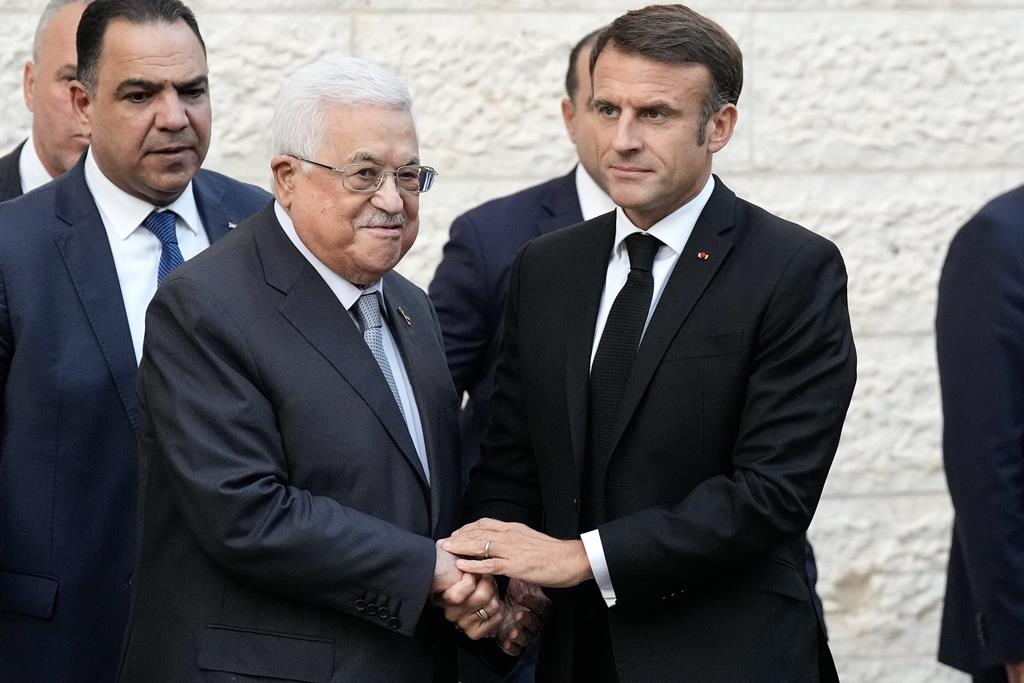
France President Emmanuel Macron announced on Thursday night that the country will officially recognize the State of Palestine during the United Nations General Assembly in September in New York.
The decision marks a geopolitical inflection of weight on the international scene, by distancing Paris from the United States and most of its historical allies, and positions France as the first G7 country to take this measure.
Macron justified the announcement as part of France’s “historical commitment to just and lasting peace in the Middle East” and stated that the moment requires a firm response.
“Today, the urgency is to cease the war in Gaza and that the civilian population will be rescued. We must build the state of Palestine, ensure its viability, demilitarization and full recognition to Israel. Only then can he contribute to the security of all in the region,” the French president wrote on network X.
The French decision was presented as a symbolic gesture, but of strong political impact.
On the same date, Macron sent a letter to the president of Palestinian Authority, Mahmoud Abbas, in which he reinforces that the only viable exit for the conflict is “a solution that honors the legitimate aspirations of the Palestinian people, end terrorism and allow Israel and their neighbors to live in peace and security.”
French gesture occurs at a time of exhaustion of ceasefire negotiations in Gaza. The negotiations conducted in Qatar failed after the withdrawal of Israel and the United States.
The UN International Conference on the two -state solution, which should be co -appeared by Macron and Saudi Prince Mohammed Bin Salman, has lost traction and will not be attended by either leaders.
Faced with the diplomatic impasse, Macron decided to act unilaterally to reposition France as a central actor in the Middle East. In his letter to Abbas, he added a handwritten greeting: “With my trust and my engagement for the peace and security of all.”
Israel and US isolation: Most UN countries already recognize Palestine
Macron’s decision also exposes the growing isolation of the United States and Israel in the global diplomatic scenario. Currently, 148 of the 193 UN Member States have already recognized the state of Palestine, including European countries such as Spain, Ireland and Norway. However, Washington and London continue to oppose, while the European Union remains divided.
In France, Palestinian ambassador Hala Abou-Hessira greeted the announcement as a gesture consistent with international law.
“It is a faithful France to its history, its policies and international law. The message to Israel and the US is clear: one cannot continue imposing facts on the ground that make the solution of two state unfeasible,” he said.
Abbas’s promise to disarm Hamas, releasing hostages, and renovating the Palestinian authority was cited by Macron as a sign of commitment to peace. Still, critics note that similar promises were made in the past without practical effect. For analyst Aaron David Miller, the French decision is “a powerful symbol, but that hardly alters the reality of Palestinians on the ground.”
The French announcement also represents a direct political challenge to former President Donald Trump, who maintains a decisive influence on the geopolitical scenario.
The relationship between Macron and Trump has been deteriorated since the first term of the American, marked by disagreements about Ukraine, commercial tariffs and personal insults.
The White House hardly responded to the decision: “This irresponsible decision only serves the advertising of Hamas and is a slap in the face of the victims of October 7,” said Secretary of State Marco Rubio.
On the Israeli side, the reaction was equally aggressive. Although the government of Benjamin Netanyahu denounced the measure as a “reward to terror”, the most extreme statements were omitted from the official French statement, which focused on the viability of a political process, not direct confrontation.
Netanyahu’s refusal to present any plan for Gaza’s future – in terms of reconstruction, security or governance – has been the target of international criticism. Macron, in particular, has expressed frustration in the face of the destruction of the territory and the number of dead, which already exceeds 59,000, according to the Ministry of Health of Gaza.
Challenge to passive diplomacy and bets on repositioning Europe
With the collapse of the UN conference and the hesitation of countries such as Germany, Italy and the United Kingdom, Macron opted for a bold movement: trying to reactivate the European diplomatic agenda to the Middle East from the legitimacy of the Palestinian cause. France, in addition to nuclear power, is the only EU country with a permanent seat on the UN Security Council.
The measure, despite sight of some analysts such as “virtue signaling”, can have a catalyst effect. In April, Macron had already suggested the possibility of a collective movement of recognition between Western powers, but the context changed after the climb of the Israel-Wire War and the paralysis of multilateral diplomacy.
The French president ended his letter to Mahmoud Abbas with a direct appeal to the Palestinian institutional reconstruction and the consolidation of the Palestinian Authority “throughout the territory.” Amid the exhaustion of other ways, Macron seems to be determined to mark a position – even with risks – and replace peace at the center of the international debate.
Source: vermelho.org.br